Kranjska Klobasa: What the Carniolan Sausage Is and How to Eat It
Kranjska klobasa is a smoked Slovenian pork sausage protected across the EU since 2015. Here is what makes it Carniolan and how it arrives on the plate.
On this page
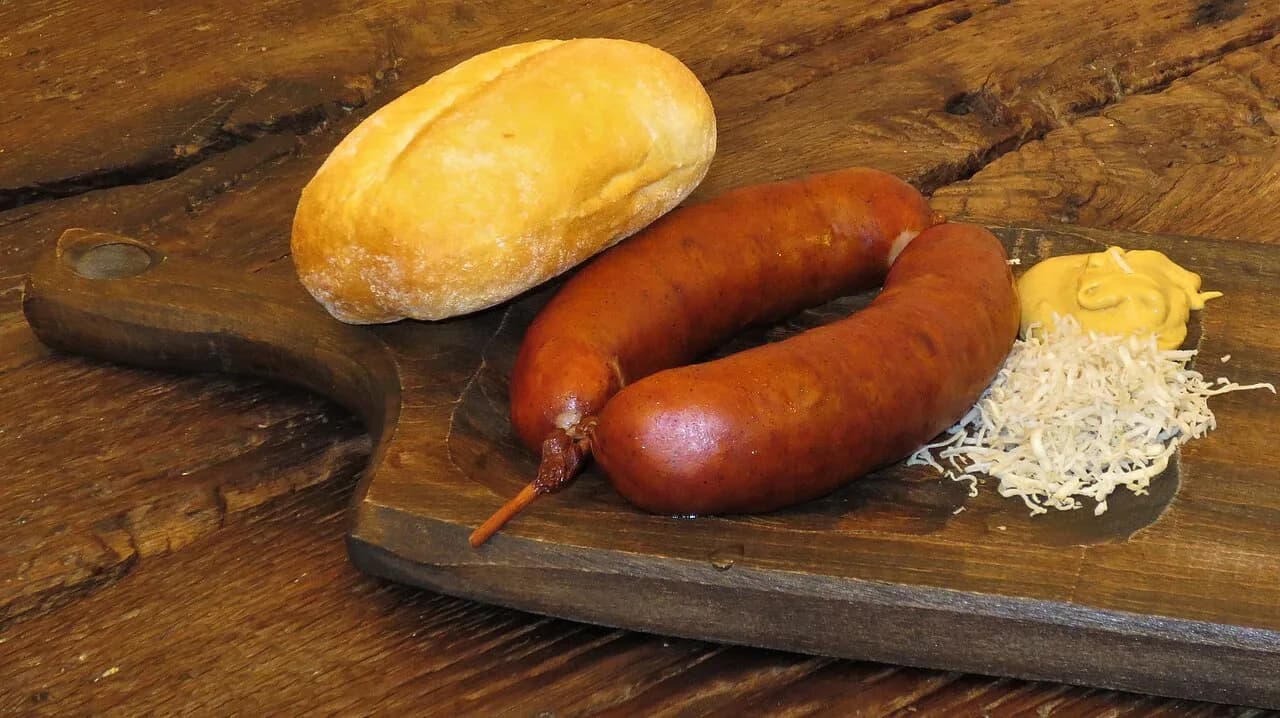
Kranjska klobasa is a coarsely ground pork sausage, smoked, held together with a wooden skewer and always cooked before it reaches your plate. It is served hot with mustard, grated horseradish, a white bun and sour or cooked cabbage or sour turnip. This guide covers what the certified recipe permits, why the name is tied to the old province of Carniola, how to read the sausage on the plate, and the names it travels under so you order it confidently. Start with the broader Slovenian Food guide if you are building a menu around it.
What Kranjska klobasa is
The sausage is made from high-quality pork and hard bacon, seasoned only with garlic and pepper, with salt and pig's intestine in the certified recipe. A wooden skewer runs through it, which is the simplest visual cue that you are looking at the real thing rather than a generic smoked sausage. It has to be cooked before consumption, so it never arrives at the table as a ready-to-eat cold cut.
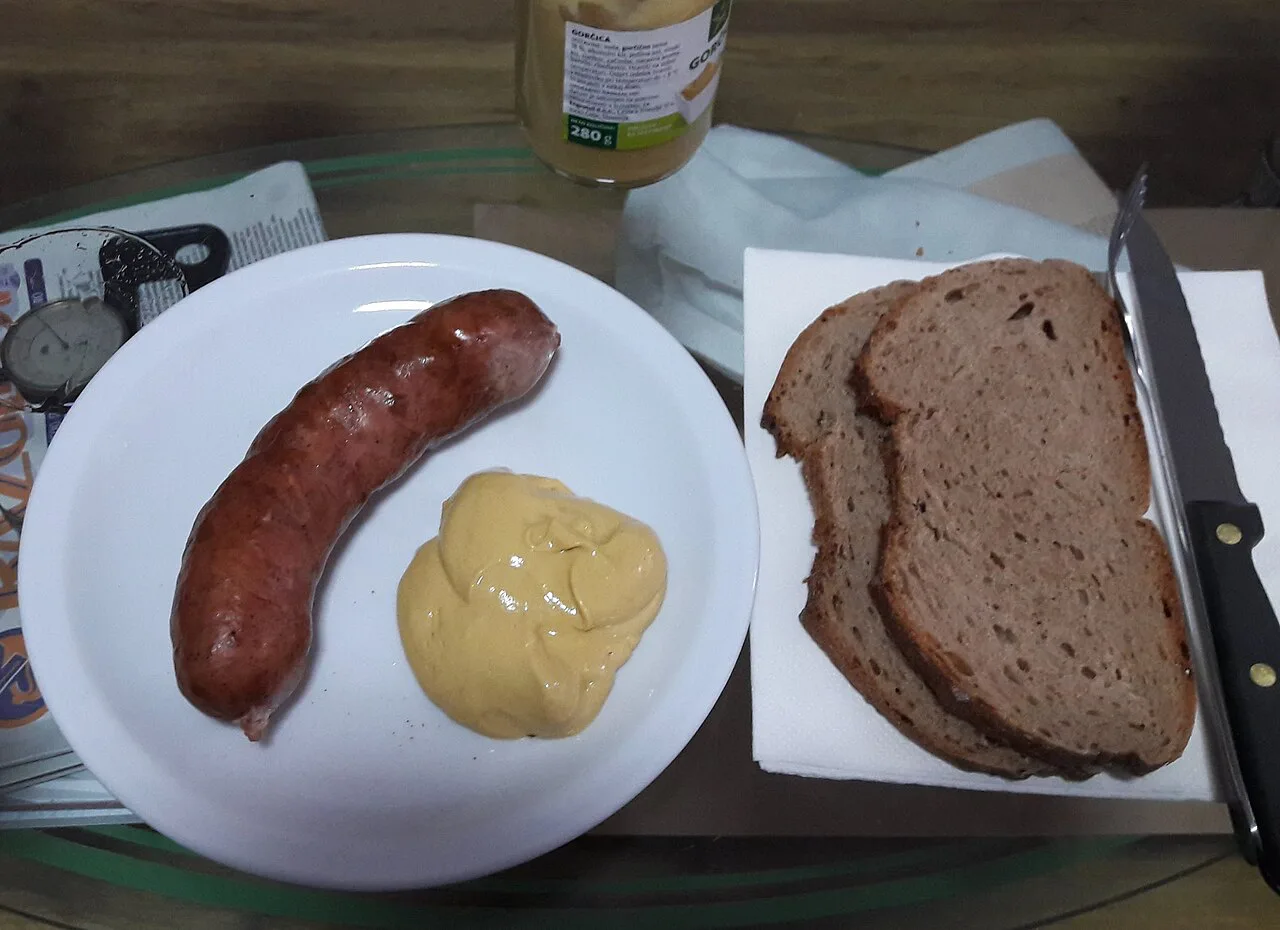
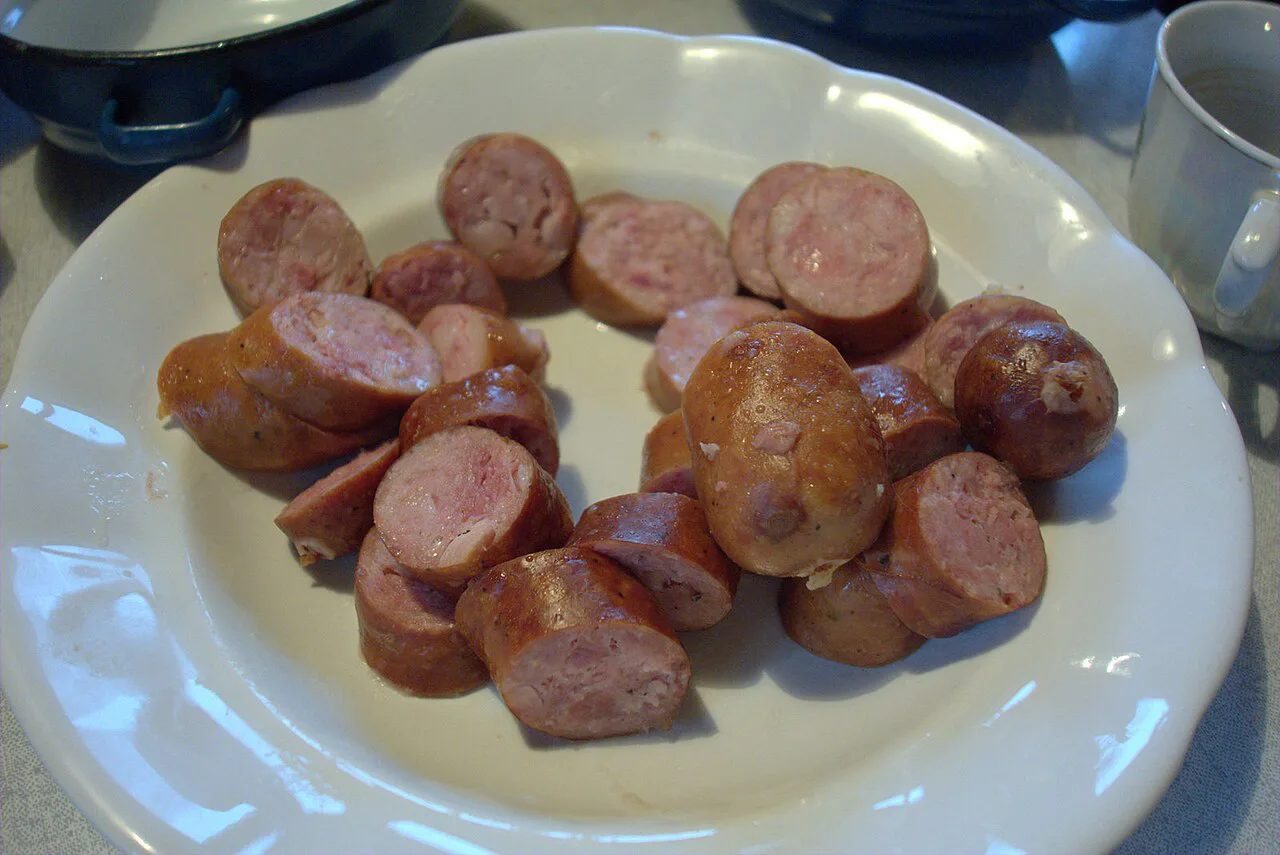
On the plate, look for a taut, crunchy casing and a juicy interior. The surface is reddish brown with a faint scent of smoke, and a cut cross-section shows pinkish-red meat against creamy white bacon that stays intact rather than dissolving. Those details are what separate a well-made Kranjska klobasa from a softer, fattier sausage.
Why it is called Carniolan
The name comes from Carniola, described by Slovenia's national portal as the central province in the territory of what is now Slovenia during the Austro-Hungarian monarchy. That is why English-language sources call it the Carniolan sausage, while the Slovenian name stays Kranjska klobasa.
What the certified recipe allows
The certified version is tightly defined: high-quality pork, hard bacon, garlic, pepper, salt and pig's intestine, seasoned with garlic and pepper only. Sodium nitrite is added, and the mixture is smoked rather than sold fresh. Nothing else is meant to go inside, which is why the flavor is savory and garlicky rather than herb-heavy or spicy.
If you are working through a list of Slovenian dishes, this one is a natural first stop because it is sold across the country and appears on ordinary lunch menus as well as festive ones. It also makes a useful benchmark: once you know the texture and smoke level, other Slovenian pork specialties are easier to place.
Protected geographical indication since 2015
In January 2015 the European Commission approved Kranjska klobasa for the register of protected geographical indications, which means the name is reserved for sausage made in Slovenia to the certified method. The status is not a marketing label; it regulates who may use the name at all.
Certified production is limited to a small, capped number of Slovenian producers who hold the certificate, so the supply is deliberately restricted rather than industrial. Treat any menu claim without the name spelled properly as a sign to ask what you are actually being served.
Kranjska, Krainer Wurst, kransky: the names it travels under
Slovenian emigrants carried the sausage abroad, and it picked up local names along the way. In German-speaking countries it is Krainer Wurst, and in English-speaking countries it appears as kransky sausage. In the Italian dialect of Trieste it is known as luganighe de Cragno.
That matters when you are reading a menu or a deli counter: kransky on an Australian board and Krainer Wurst on a German one refer back to the same Carniolan sausage. Ordering it twice under different names is an easy mistake to avoid once you know the three labels.
How it is served
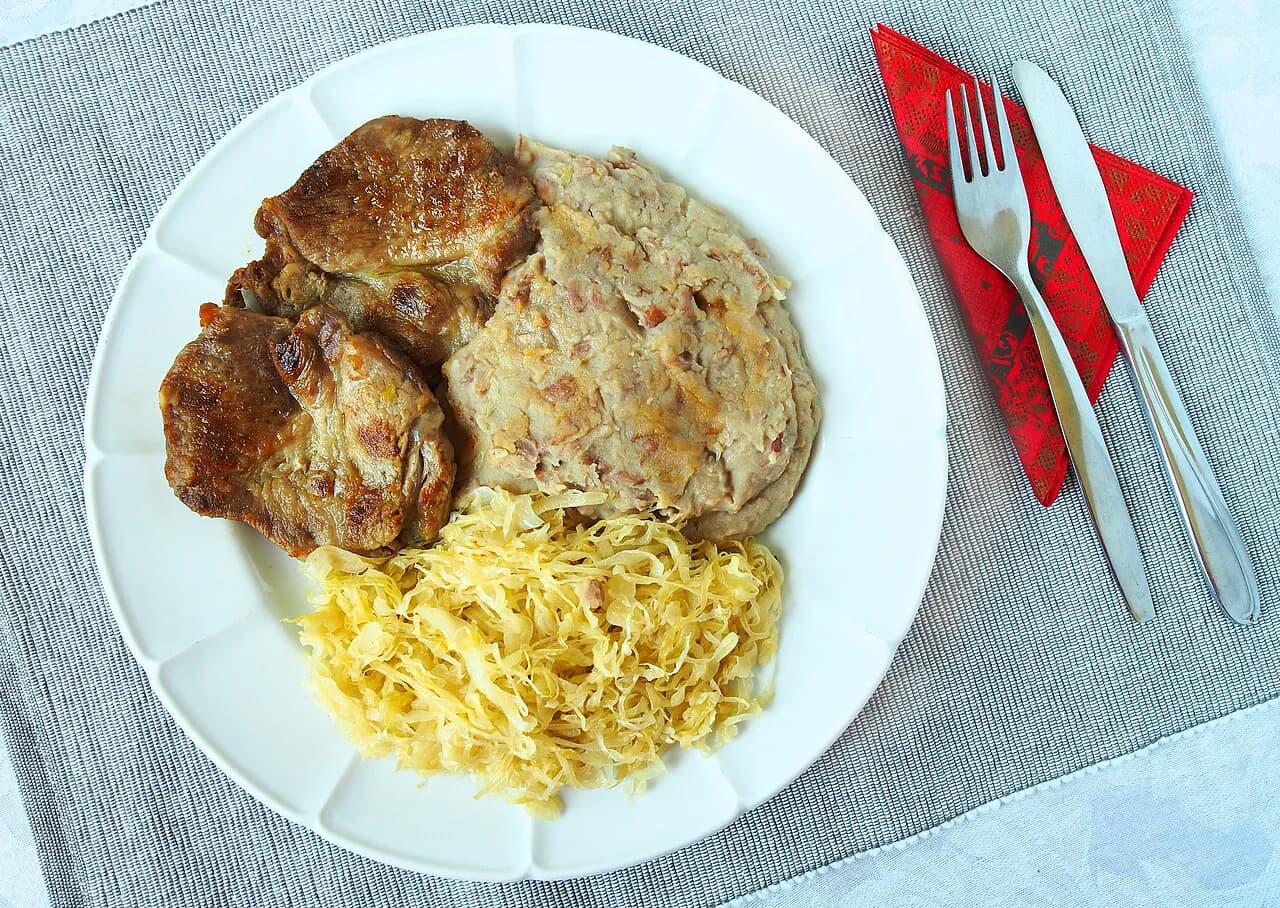
Kranjska klobasa is cooked first, usually by simmering, then served hot. The classic plate pairs it with sour or cooked cabbage or sour turnip, a white bun, mustard and grated horseradish. Wine is the preferred drink, though beer works well too.
At home, cook the sausage through before serving — the certified product is smoked but must be heated and is usually eaten hot rather than as a cold cut. Keep it simple and let the smoke and garlic carry the plate. Serve with mustard, horseradish, sauerkraut and bread.
If you are planning a fuller Slovenian table, this sausage pairs well with other traditional dishes, and it is light enough to leave room for a soup or a slice of Slovenian cheese afterward. Browse more Slovenian Dishes if you want to plan a wider menu.
Where the first written mentions come from
The earliest mention in German is in Katarina Prato's cookbook Süddeutsche Küche from 1896, which describes how to cook the sausage. The oldest recipe for making it appeared in 1912 in the sixth edition of Slovenska kuharica by Felicita Kalinšek.
A widely repeated story says Emperor Francis Joseph stopped at an inn near Naklo and was told the plain-looking sausage before him was no ordinary sausage but a Kranjska klobasa. The sources present it as a legend rather than a documented event, so enjoy it as a story over lunch rather than as history.
How to order it in Slovenia without overthinking the menu
Look for the full name Kranjska klobasa, and expect it in the hot-food section rather than among cold cuts. If the menu offers it with mustard and horseradish, that is the standard serve; if those are missing, ask for them, because they cut the smoke and fat.
Pair it with a bowl of soup or a plate of cured pork if you want a broader Slovenian spread, and finish with something lighter than a second sausage. One portion is usually enough for a lunch stop, especially with bread and cabbage alongside.
Why it is worth trying once
Even if sausage is not usually your order, Kranjska klobasa is a useful introduction to Slovenian cooking because it is simple, smoked rather than spiced, and served with sharp condiments that keep it from feeling heavy. It is also widely available, so it fits into a normal lunch rather than requiring a special detour.
Ordering your first Carniolan sausage
Order it by its full Slovenian name, expect it hot and cooked, and take the mustard and horseradish seriously. The surrounding plate of cabbage or turnip and a white bun is part of the dish, not a side note.
Remember the three names, Kranjska klobasa, Krainer Wurst and kransky, so you recognize the same sausage abroad. One portion with bread and cabbage is a complete light meal.
Explore more Slovenia guides
Frequently Asked Questions
Is kransky the same as Kranjska klobasa?
Yes. Kransky is the English-speaking world's name for the Carniolan sausage, and Krainer Wurst is the German name. The Slovenian original is Kranjska klobasa, protected under EU geographical indication since January 2015.
Do I need to cook Kranjska klobasa before eating it?
Yes. It must be cooked before consumption and is usually eaten hot, together with sour or cooked cabbage or sour turnip. A white bun, mustard and grated horseradish are the usual companions.
What is the difference between Kranjska klobasa and kielbasa?
Both are pork sausages, but Kranjska klobasa has a defined certified recipe of pork, hard bacon, garlic, pepper, salt and pig's intestine, and only certified Slovenian producers may use the name. Kielbasa is a broader Polish term covering many sausages.
Sources
Notes for your Slovenia trip
Optional updates to our Slovenia place guides.
You might also like
Continue reading
More guides you'll find useful