Slovenia Towns: 12 Places to Visit Beyond Ljubljana
A practical guide to Slovenian towns beyond Ljubljana, from Piran and Koper to Bled, Škofja Loka, Ptuj and Maribor, with what each is like and what to see.
On this page
Slovenia is a country of small towns, not metros. Government figures put 69 settlements with city status and 104 urban settlements in a country where 90 percent of settlements have fewer than 500 residents and only two settlements have more than 50,000 inhabitants, so almost every place on this list is a historic core you can walk across in an afternoon.
The towns below are grouped by the route they suit: the short coast, the Alpine north, the central belt around Ljubljana, and the east. If you are still assembling the trip, start with our guide to things to do in Slovenia and come back here once you have picked a region.
Piran: a walled coastal town best handled on foot
Piran is a compact old town on a peninsula, and its value is in walking the narrow streets rather than driving between sights. Parking is the practical obstacle if you drive, so treat the car as something to leave outside the center and plan the visit around the pedestrian core; that makes Piran a strong half-day or an overnight if you want the evening without traffic.
Piran is small even by Slovenian standards, with a 2026 population estimated at 3,645 by World Population Review, which is roughly the scale of a large village with a dense historic center. The old town is the destination here, and the short Slovenian coastline means you can pair Piran with Koper or Izola in the same day if you are based nearby.
Koper: the coast's working town
Koper is the largest of the coastal towns and the one with a working port and administrative role behind it. Government development policy names Ljubljana, Maribor and Koper as the country's three centers of international importance, with Koper's position tied to its coastal location and port, so the old town sits beside a functioning city rather than a resort.
That makes Koper the practical coastal base: you get an old core to wander plus the everyday services a town of its size supports. World Population Review estimates Koper at 26,532 in 2026, which is several times Piran's figure, and the difference shows in how much of the town operates for residents rather than visitors.
Izola: the smaller fishing stop
World Population Review puts Izola at 11,418 in 2026, so it reads as a town rather than a city, and it is the smallest of the three coastal stops.
The honest tradeoff on this coast is time versus depth: three coastal towns in one day gives you little more than three quick looks and no proper meal in any of them. Pick one for a slow afternoon and treat the other two as brief stops, and remember that a car is more liability than asset in Piran specifically.
Bled: the lake town, and what that means for a short visit
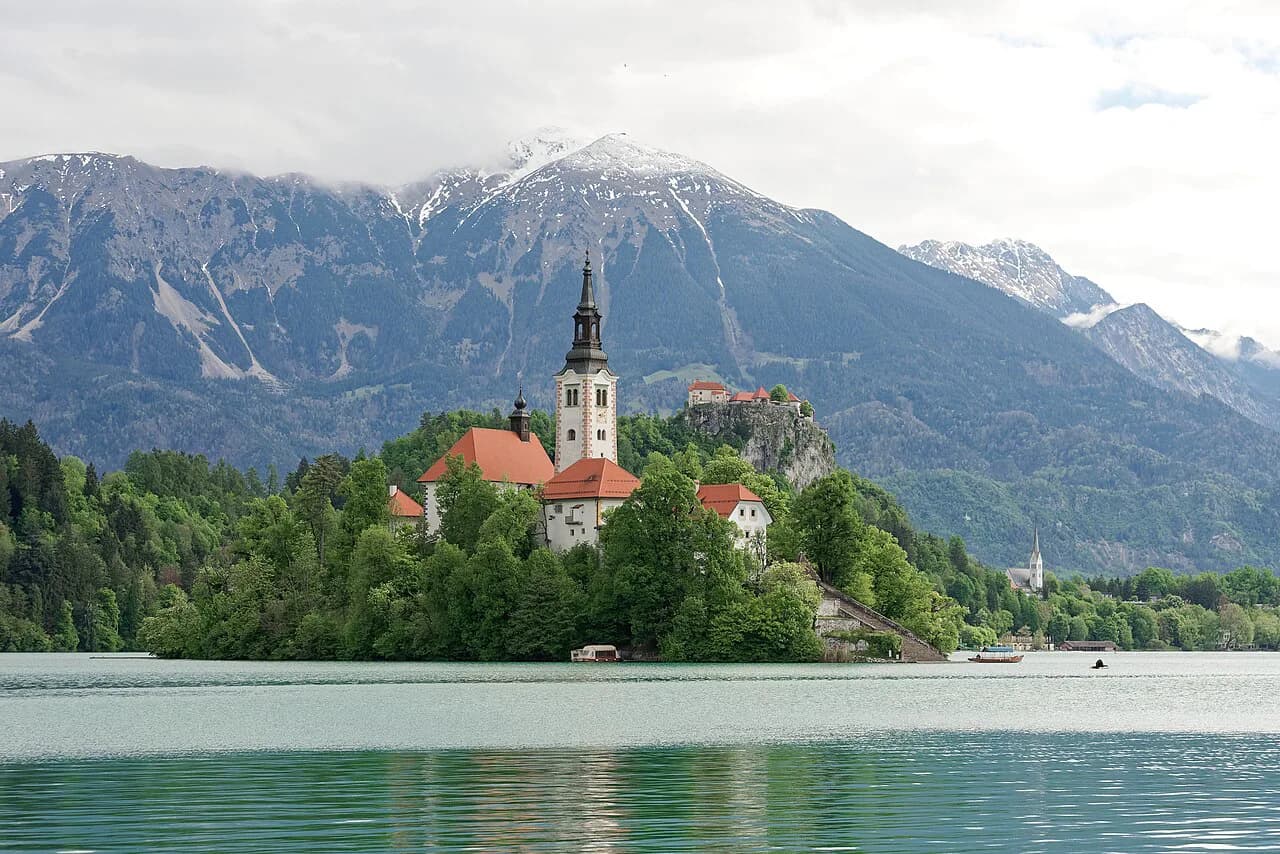
Bled is a town built around a lake, and the practical approach is to use it as a base and spend your best hours outside the busy core rather than trying to see the lake from the middle of it.
The town itself is small: World Population Review estimates Bled at 5,215 in 2026, which is why the summer visitor load lands so heavily on a few streets. Bled also anchors the Alpine chapter of any trip, so it pairs naturally with Kranjska Gora to the northwest, with the villages around Bohinj (Ribčev Laz, Stara Fužina, Ukanc) and with Radovljica and Škofja Loka to the southeast.
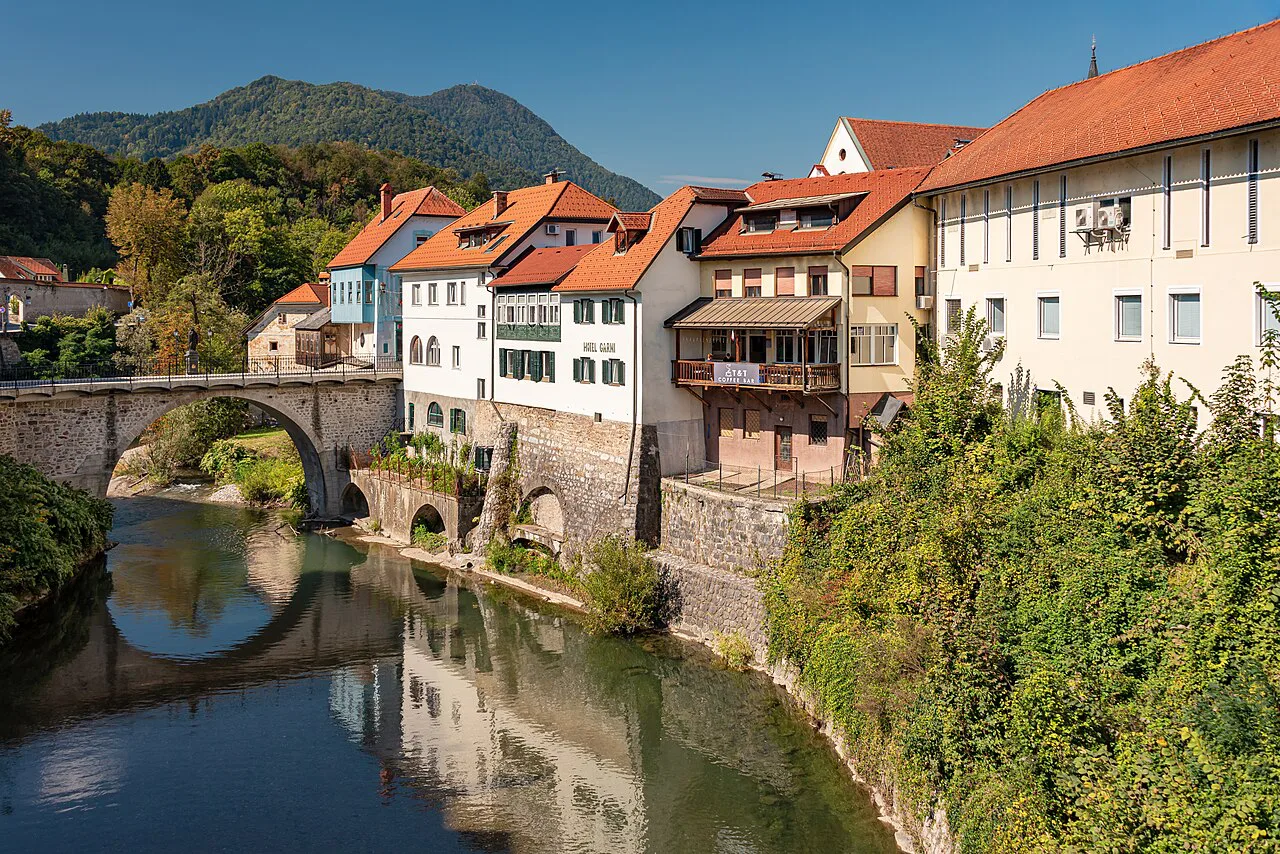
Radovljica and Škofja Loka: two small towns worth their own stop
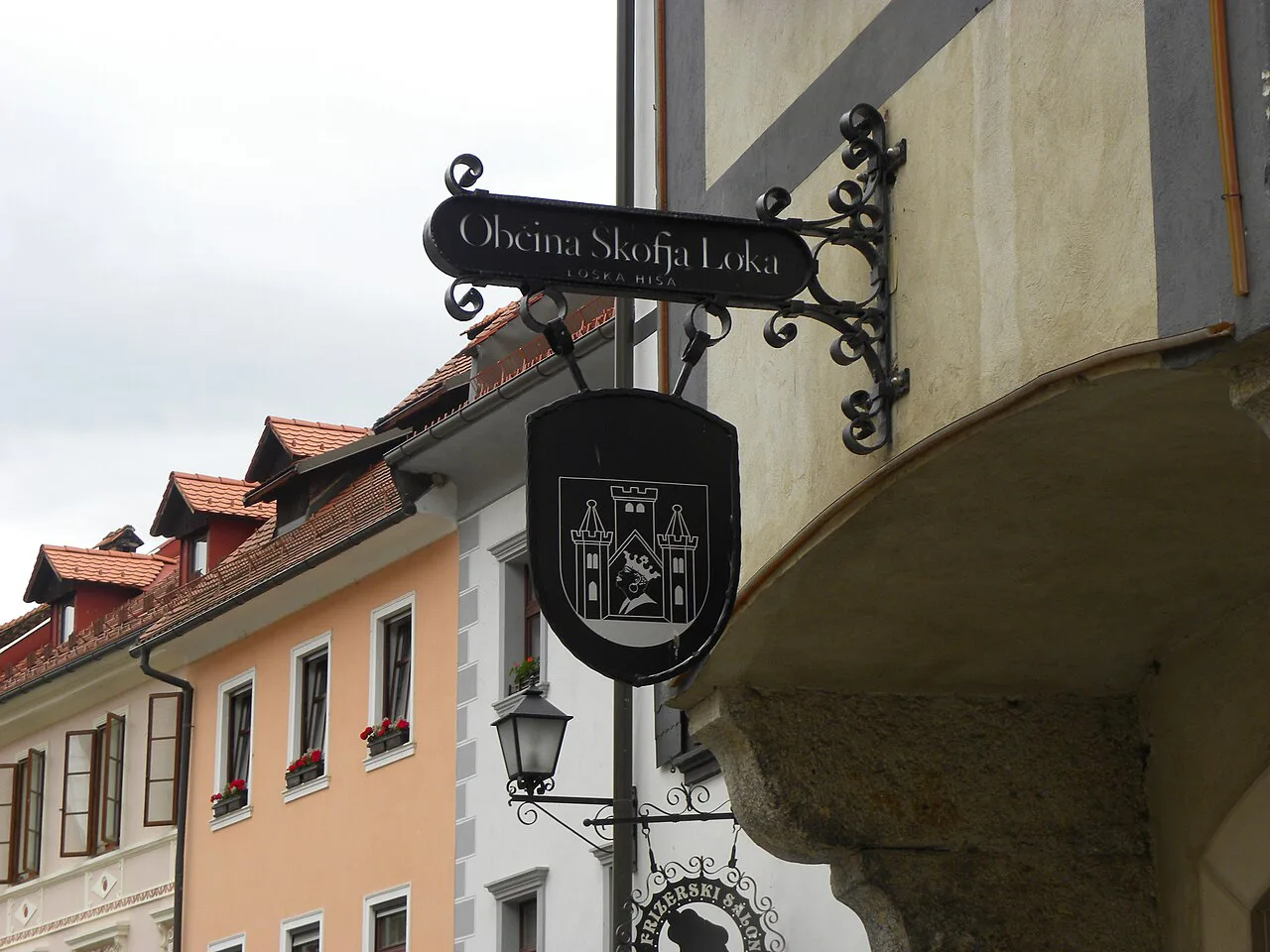
Radovljica sits close enough to Bled to be a stop on the same day and gives you a compact old town. Škofja Loka is the stronger half-day of the two: a photogenic medieval town with bridges, cobbled streets and castle views, easily covered on foot and workable as an overnight if you prefer small-town evenings.
Both towns belong to the central belt, where day trips branch cleanly without moving hotels. The 2026 World Population Review estimate for Škofja Loka is 11,867, so expect a real town with residents rather than a preserved film set.
Kranj and Kamnik: practical towns with something at the edge
Kranj is the practical town near Ljubljana, underrated, with a dramatic canyon and a local rhythm rather than a tourist one; it works for travelers who want an easier base than always staying in the capital. Kamnik is the gateway into the Kamnik–Savinja Alps, the sensible stop when your route is trending toward valleys and lower mountain access instead of lakefront hotels.
These are the towns that solve logistics: they work as bases rather than destinations, and they let you skip lakefront prices for a bed. World Population Review estimates Kamnik at 13,728 in 2026, comparable to Škofja Loka, which tells you both are modest towns with real centers rather than suburbs of the capital.
Idrija: the western hill town on the road to the Soča
Idrija is a hill town in western Slovenia with a steep setting, and it suits travelers heading between the capital and the west who want a town rather than another natural sight.
For a broader look at how heritage designations shape a visit, see our guide to Slovenia UNESCO Sites. World Population Review estimates Idrija at 5,779 in 2026, so it is a small town where a couple of hours is a reasonable allocation.
Celje, Ptuj and Maribor: the eastern towns
The east has the country's second urban center and two smaller towns with strong old cores. Maribor, with a 2026 estimate of 97,712 from World Population Review, is one of only two Slovenian settlements with more than 100,000 inhabitants, alongside Ljubljana, so it behaves like an urban place rather than a market town.
Ptuj is the old-center stop, estimated at 18,365 in 2026, and it makes sense as a half-day or an overnight on the road between Maribor and the Croatian border. Celje, estimated at 38,117, is the larger of the two and works as a practical stop if you are moving between central and eastern Slovenia rather than chasing a postcard.
Government figures list Celje, Koper, Kranj, Ljubljana, Maribor, Murska Sobota, Nova Gorica, Novo mesto, Ptuj, Slovenj Gradec and Velenje as Slovenia's 11 urban municipalities, the administrative signal that these are the centers with services and transport connections a route can rely on. Use that list when you are deciding where to break a long drive east.
Novo Mesto: the southeastern base
Novo mesto sits in the southeast and is the natural base when your route turns toward Kočevje and the forested south. It is an urban municipality with the services to match, and World Population Review estimates it at 24,832 in 2026, making it comparable to Koper in size.
Treat Novo mesto as infrastructure as much as sightseeing: it is where you stock up, sleep and sort out the next leg before heading into thinner country. That is a different job from Piran's, and it is the reason a single ranked list of Slovenian towns is not much use for planning.
How the towns connect
Rail in Slovenia is scenic and inexpensive but slower than the road, and buses reach towns more thoroughly than trains do, though the network is split across many operators. That combination makes town-hopping by public transport possible but time-hungry, and the honest calculation is whether the hours lost are worth the money saved.
A car changes what is reachable: many of the country's natural landscapes sit away from rail and bus lines, which is the tradeoff worth weighing before you commit to a no-car trip. If your plan is towns only, public transport is workable; if it is towns plus the mountains or the Karst edge, the car is the difference.
Matching a town to your route
Group the country into three practical bases: the coast and Karst in the southwest, the Alps in the northwest, and the east around Maribor and Ptuj. Pick two or three bases and plug day trips into them rather than stacking six towns into seven nights, which turns the trip into luggage logistics.
For the coast, that means Koper or Portorož as a base with Piran as a day or evening visit; for the Alps, decide between the easier lake access at Bled and the quieter villages around Bohinj, which are Ribčev Laz, Stara Fužina and Ukanc rather than a single town.
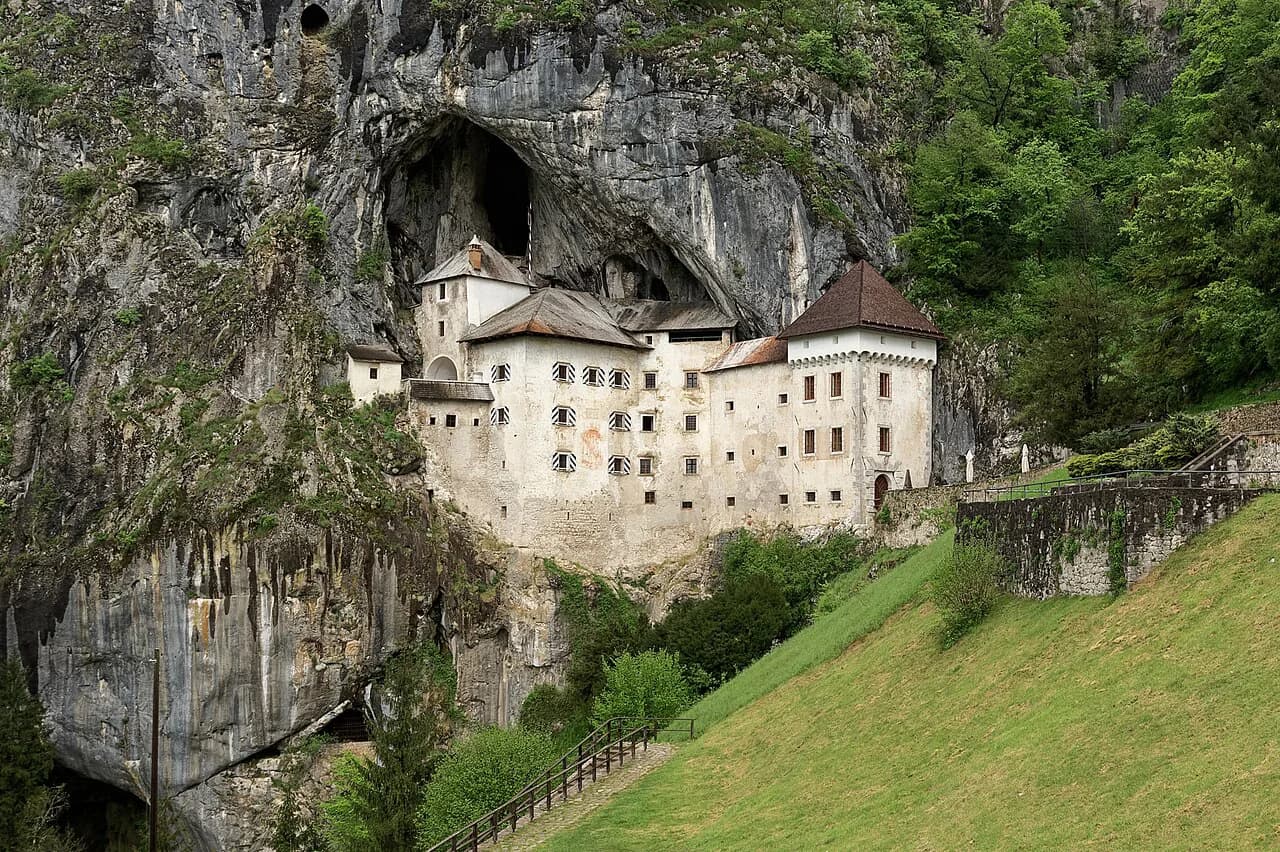
Cave and castle visits around Postojna and the Škocjan Caves belong to the Karst chapter of the same trip, and our Slovenia UNESCO Sites guide covers what those designations protect. If you want a cave, a castle and a town in one day, the Karst and the coast combine more cleanly than the Alps and the coast do.
Which town fits your route?
Choose by job rather than by reputation: Piran for a walled coastal core on foot, Koper for a coastal base with services, Bled for lake access with a busy center, Škofja Loka for a compact medieval half-day, and Maribor or Novo mesto when you need a city to organize the next leg.
Few Slovenian towns require more than half a day on their own, which is exactly why the route matters more than the list. Build the trip around two or three bases and let the towns fill the gaps between them.
Explore more Slovenia guides
Frequently Asked Questions
How many towns in Slovenia have city status?
The Slovenian government counts 69 settlements with city status and 104 urban settlements in total. Because 90 percent of Slovenian settlements have fewer than 500 residents, most of those places are small enough to walk in an afternoon, and only Ljubljana and Maribor exceed 100,000 inhabitants.
Do you need a car to visit Slovenian towns?
Not for towns alone. The rail network is scenic but slow, and buses cover towns more thoroughly than trains, so a town-only trip works on public transport if you accept longer travel times. A car becomes the deciding factor when you want to add mountain valleys and the Karst edge to the same itinerary.
Sources
Notes for your Slovenia trip
Optional updates to our Slovenia place guides.
You might also like
Continue reading
More guides you'll find useful