Slovenia Lakes: Bled, Bohinj and Where Else to Go
Slovenia's two headline lakes are Bled and Bohinj. Here's how each is laid out, how long it needs, and what changes in summer.
On this page
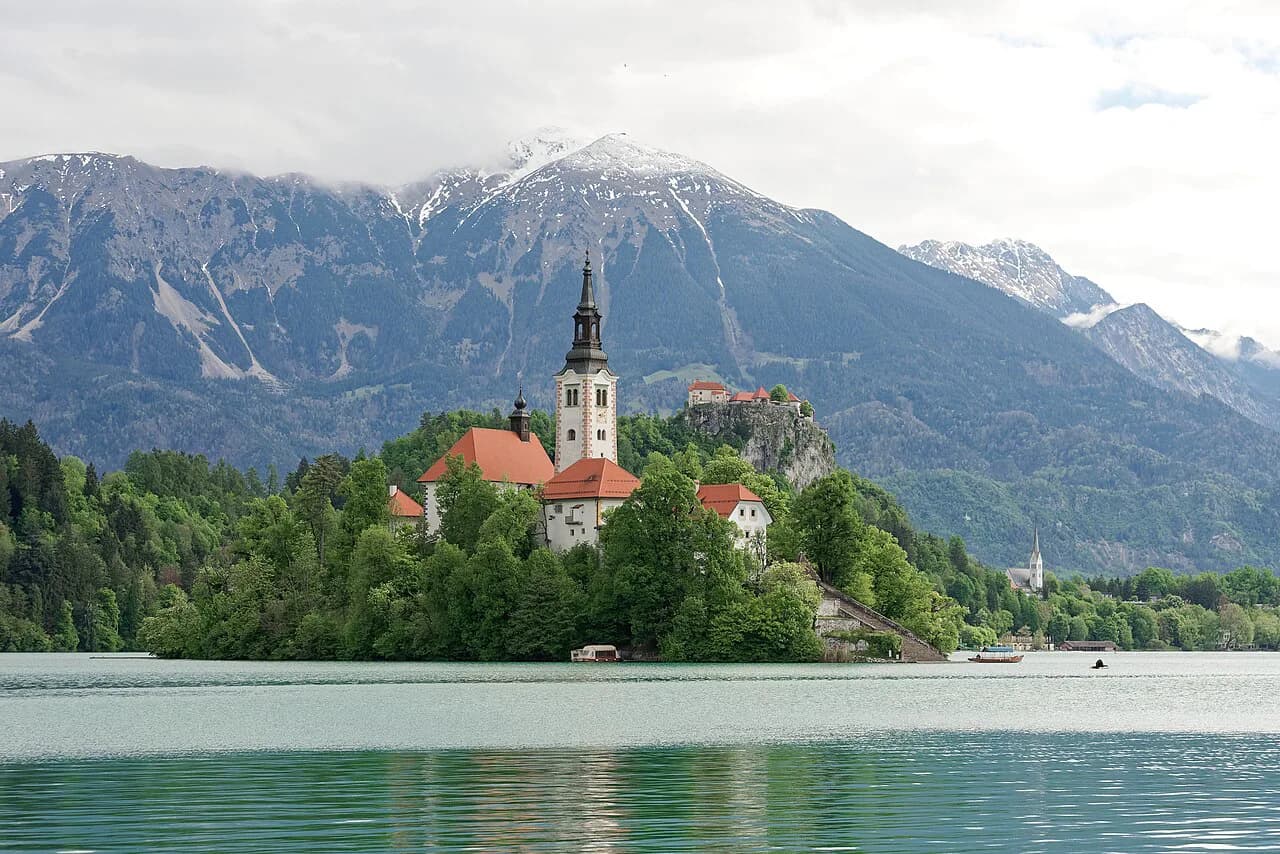
Plan around two lakes: Bled and Bohinj. Lake Bled is small, developed and easy to walk in an afternoon, with Bled Island and its church offshore and Bled Castle on the cliff above. Lake Bohinj is several times the size, sits inside Triglav National Park, and spreads its villages along a quieter shore.
The numbers matter more than the photos. The path around Lake Bled runs 6 km and the lake covers 147 hectares, while Lake Bohinj stretches 4,100 meters long, 1,200 meters wide and 318 hectares, according to a lakes overview from Gradtur. That scale difference is why Bled suits a half-day stroll and Bohinj rewards a full day or a base of its own.
Lake Bled: the island church, the castle, and the 6 km shore path
Bled works because everything sits close together. You can walk the 6 km loop around the shore, look out at the island church, and climb to the castle on the crag above the lake for the view back across the water toward the island. Gradtur lists the castle and the island church as the two sights to see at Bled alongside the loop path, and describes the path as suitable for recreation.
The town sits at one end of the lake, with the tourist facilities, restaurants and hotels concentrated there, while the opposite end is quieter and less built up. That layout is the main planning decision at Bled: stay or linger near the town if you want options on foot, or walk to the far shore if you want the loop without the bustle.
Allow a half-day for the shore path and the island, and add time if you want the castle climb as well. The lake itself is modest in size, so you are not covering distance so much as stopping often; the loop, the boat out to the island and the castle each take a slice of the same afternoon.
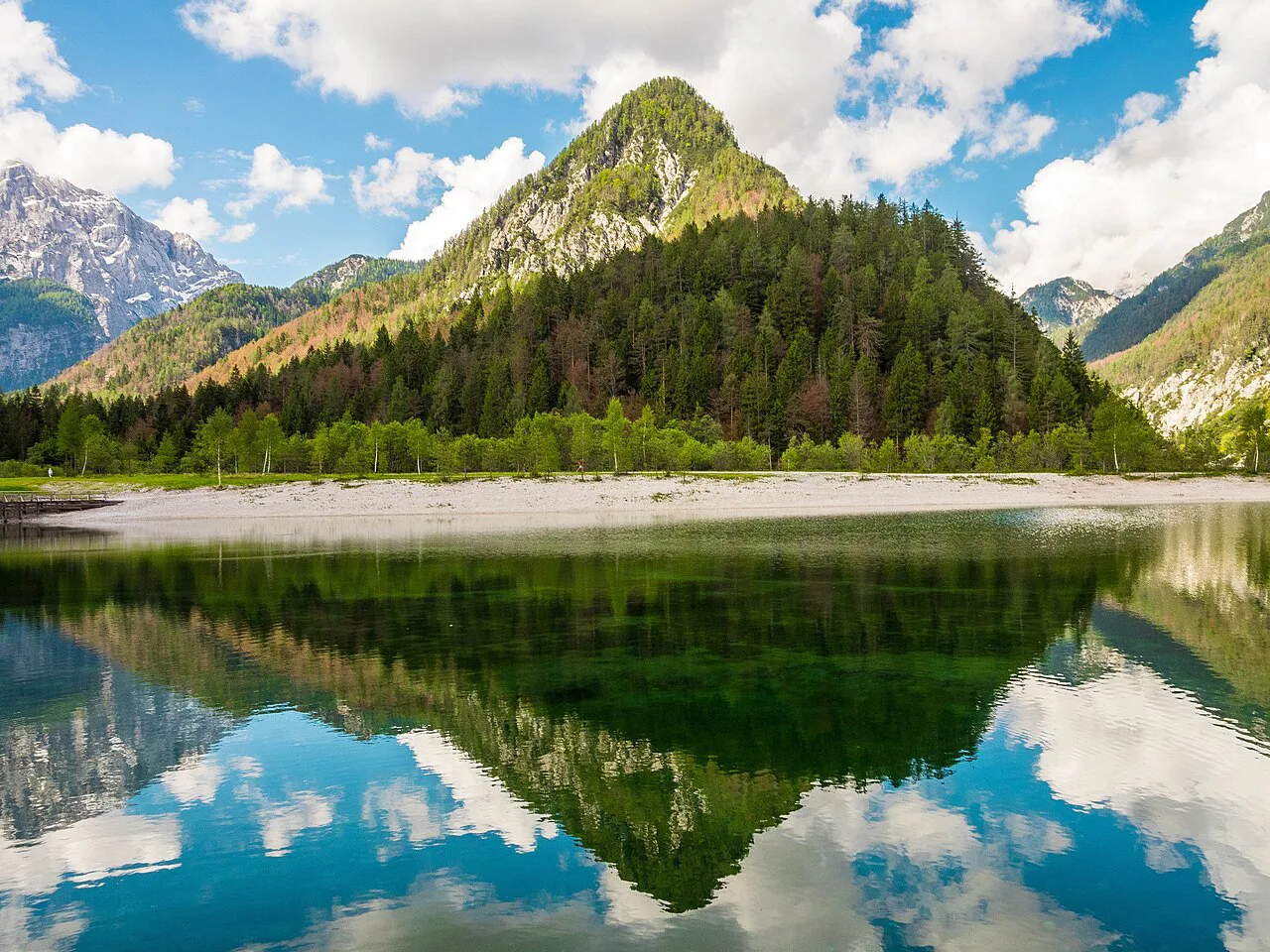
Bled in summer: the castle bath and the water temperature
In summer the lake warms to around 23 degrees Celsius, which is the seasonal figure Gradtur gives rather than a promise for a particular week. Treat it as a guide and check conditions locally before you commit to a long swim.
On the shore at Bled there is a castle bath area set up with toilets, changing facilities and children's playgrounds, according to Gradtur. That makes it the practical place to swim rather than picking a random stretch of grass, especially if you are with kids or want somewhere to leave bags.
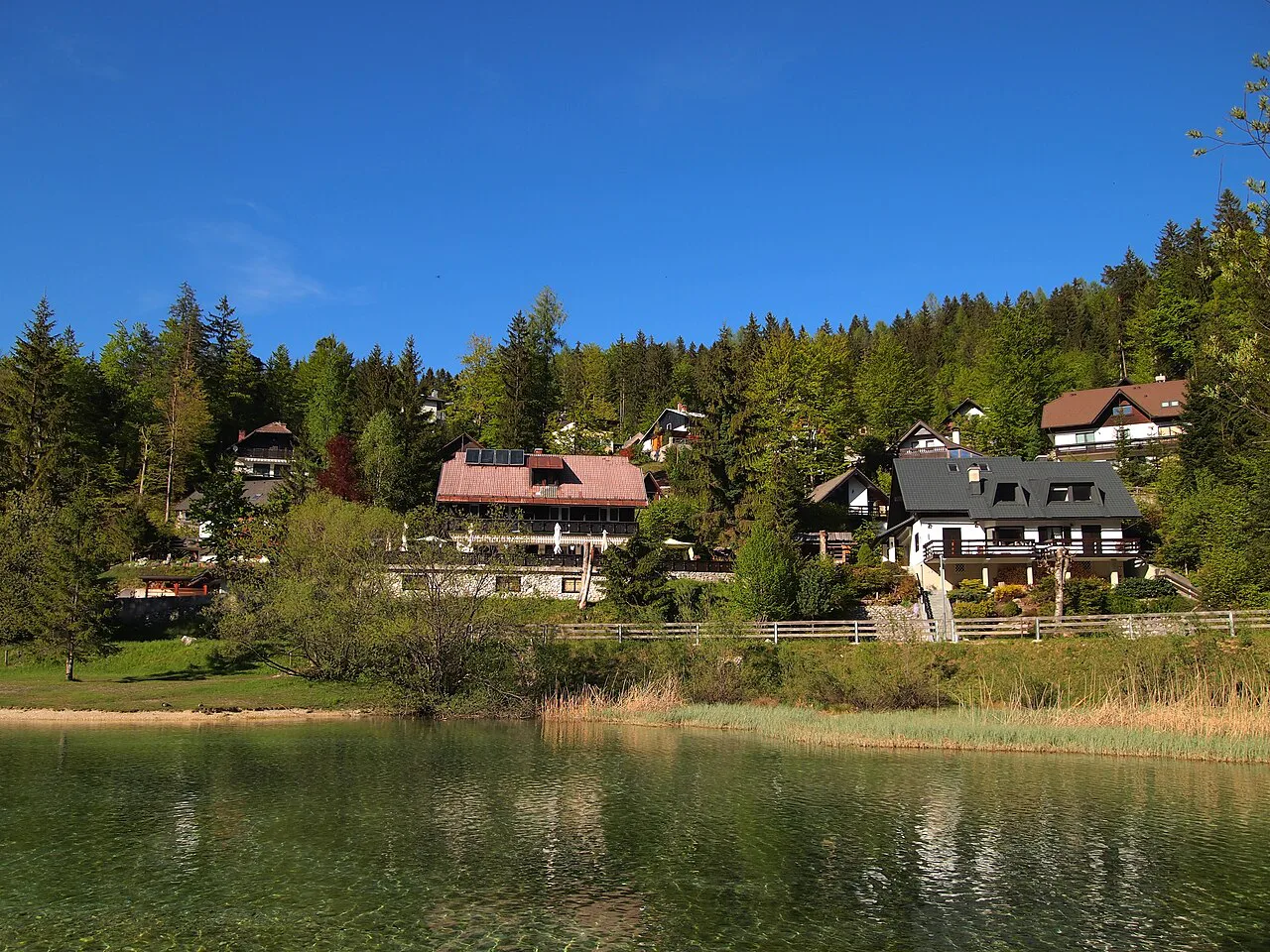
Lake Bohinj: a bigger, quieter lake inside Triglav National Park
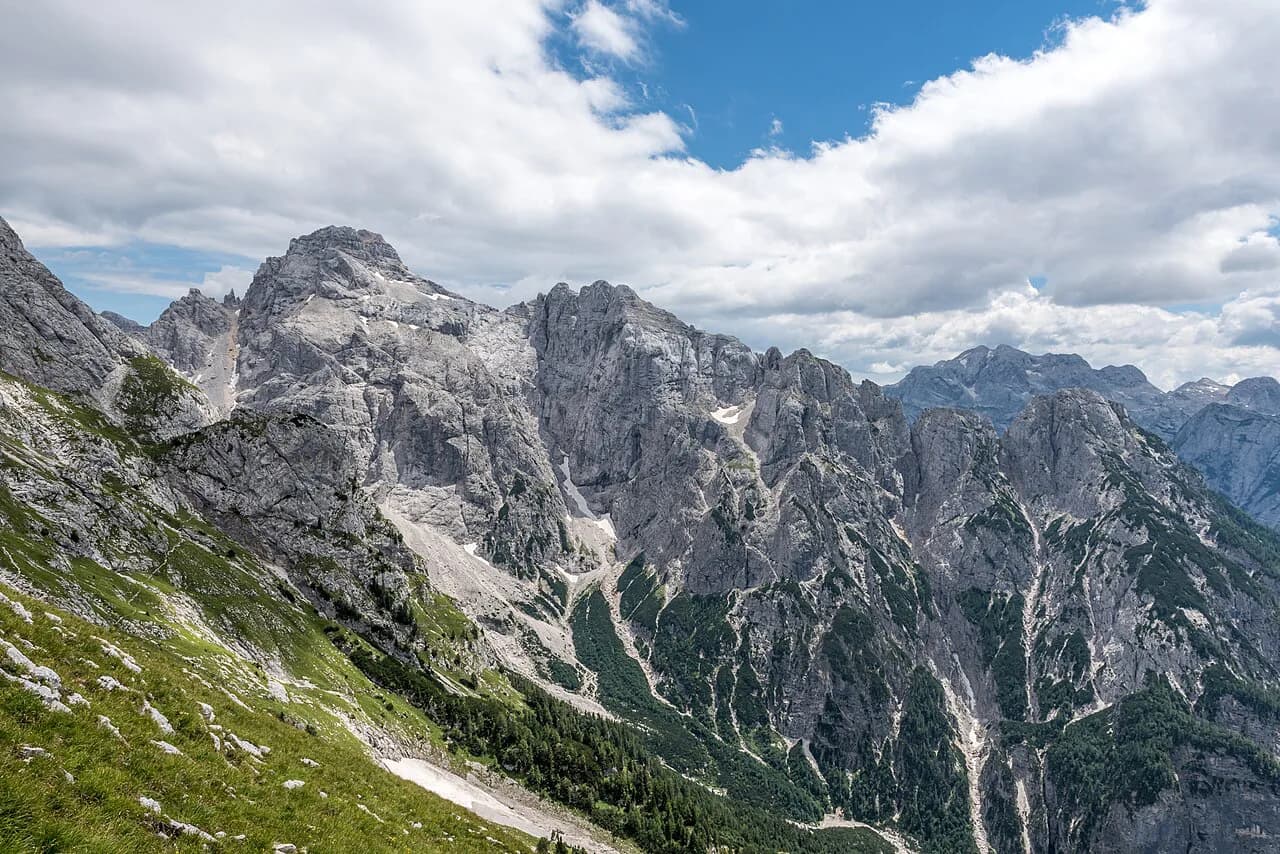
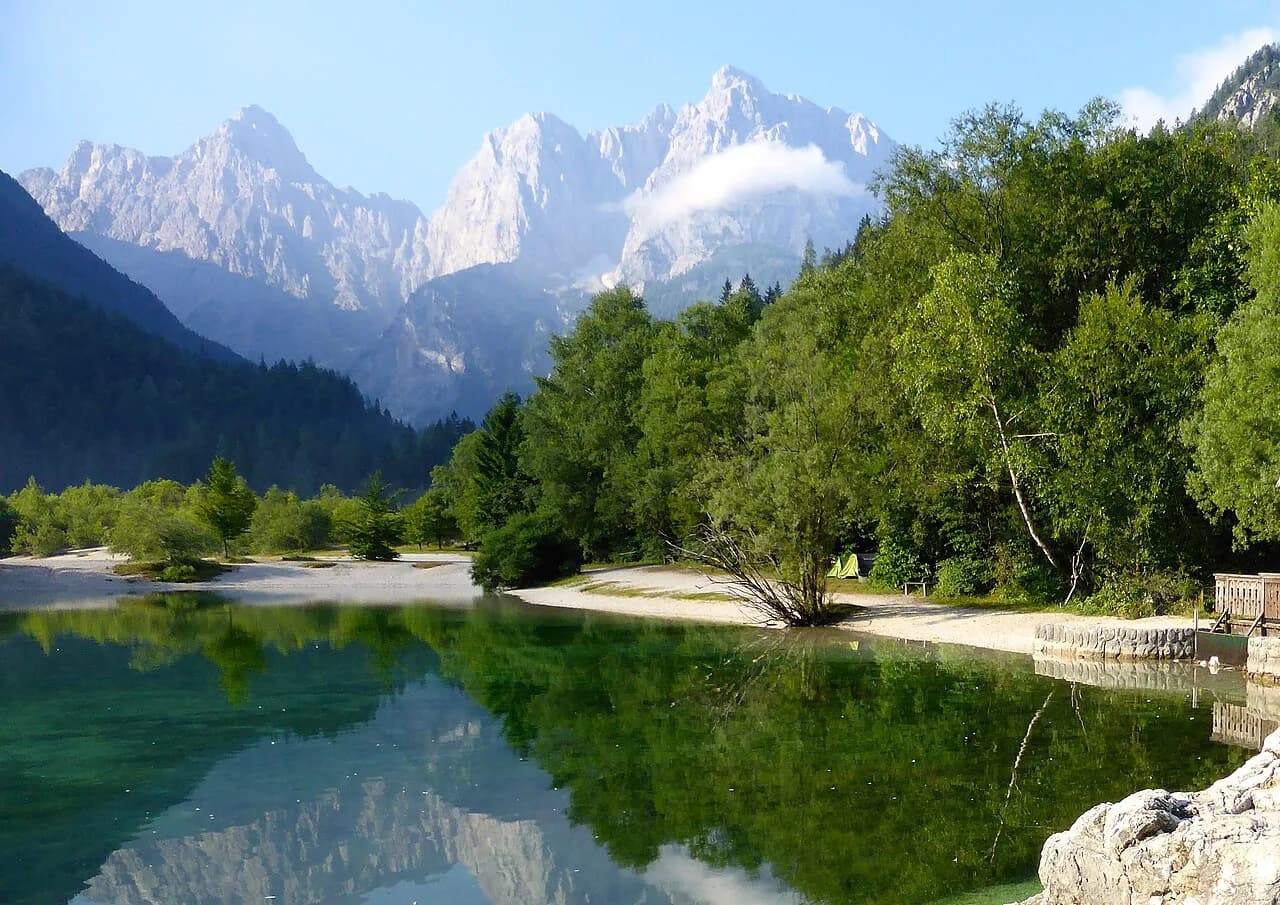
Bohinj sits within Triglav National Park, which shapes what the lake feels like: villages rather than a resort town, and the Julian Alps rising behind the water. Gradtur gives the lake as 4,100 meters long and 1,200 meters wide, covering 318 hectares, with a deepest point of 45 meters.
Think of Bohinj as the opposite trip to Bled. It is less than half an hour's drive west of Bled, and it reads as remote and tranquil, with quiet villages and mountains around a lake that is well suited to rest as much as activity. If Bled is the town-and-lake stop, Bohinj is the lakeside base.
Summer swimming here follows the same pattern as Bled but with a slightly cooler figure: Gradtur puts the summer water temperature at about 22 degrees Celsius. The lake is large enough that the shore you choose determines your day, so pick a village end deliberately rather than drifting in from the road.
Savica Waterfall and the Vogel cable car on the same side of the lake
Two add-ons sit within easy reach of Bohinj and can be paired with a lake morning. Savica Waterfall is hidden among the steep walls of the Komarča, and Vogel, at 1,535 meters, is reached by a panoramic cable car with views over the mountains, according to Gradtur.
Build the half-day around one of them rather than both. The waterfall and the cable car each pull you off the lake, and Bohinj's appeal is partly the time you spend sitting by the water; if you would rather compare waterfalls across the country, there is a separate guide to waterfalls in Slovenia.
Bled vs Bohinj: crowds, layout, and how much time each needs
Bled is the busier of the two because the town, the island and the castle stack into a compact area, and the lake is small enough that everyone ends up on the same loop. Bohinj absorbs people more easily: the lake is wide, the villages are spread out, and the Triglav National Park setting keeps development in check.
A realistic split is one afternoon at Bled for the shore path, the island and the castle, then a full day or an overnight at Bohinj for the lake plus either the waterfall or the cable car. If your trip is short, Bled gives you the postcard in a few hours; if you want a slower stay, Bohinj holds you longer.
Getting on the water: the pletna boat and rented boats
At Bled the classic move is the pletna, a traditional boat that takes you out to the island so you do not have to row. Think Slovenia describes the pletna trip to the island as one of the highlights of a Slovenia trip, and notes that kayaks and rowing boats are also easy to hire on the lakes.
On Bohinj the water is the point rather than a single crossing. Both lakes are warm enough to swim in summer and have popular swimming areas, and hiring a kayak or rowing boat is a simple way to get off the shore without booking a tour.
Boat fares, seasonal timetables and rental prices are not something to take from a general overview, so confirm them at the lake before you build a day around a crossing. Where a boat or rental desk is operating on your dates, it is the operator who knows.
How to reach Bled and Bohinj, and where Radovljica fits
The two lakes are close: Bohinj is less than half an hour's drive west of Bled, which makes them a natural pair on one itinerary rather than two separate trips. Driving between them means you can see both in a single day, though Bohinj deserves more than a pass-through.
On the Bled side, Radovljica is a further add-on about 10 km south of Bled, described as a charming medieval town. If you are using Bled as a base, Radovljica is an easy half-day that does not compete with the lake for time.
The Sava Bohinjka river runs between the two lakes and down from Lake Bohinj, and Think Slovenia notes it offers scope for fly-fishing, kayaking and swimming. If you are based between the lakes, the river is the third option alongside the two shorelines.
Where swimming is not allowed, and keeping the water clean
Swimming rules are not uniform across Slovenia's lakes. The national tourist board states plainly that swimming in high mountain lakes is forbidden, which is a separate category from the two main lakes where summer swimming is part of the season.
At Bled and Bohinj the etiquette is the ordinary one for a lake people drink from and swim in: use the designated bathing areas where they exist, take your litter out, and keep soaps and sunscreens out of the water where you can. The castle bath at Bled gives you a defined place to swim with facilities rather than an improvised entry point.
Picking a base between the two lakes
Choose Bled if you want to be in a town with restaurants and hotels around you and the island and castle within walking distance. Choose Bohinj if you would rather wake up inside Triglav National Park with the Julian Alps across the water and a lake that takes more than an afternoon to know.
If you are dividing a longer trip among Slovenia's protected areas, it helps to see how Bohinj fits alongside the country's other parks and reserves before you commit the nights. The wider Slovenia national parks guide covers that ground.
Whatever you pick, build in a buffer. Summer is when both lakes see the most people, and the difference between a relaxed loop at Bled and a crowded one is often the hour you arrive rather than the day you choose.
Which lake should you build your day around?
If you have one day, give it to Bled: walk the 6 km loop, take the pletna to the island church, and climb to the castle for the view. It is compact, and you will have covered the essentials by late afternoon.
If you have two days or a night to spend, add Bohinj and pick one add-on, either Savica Waterfall or the Vogel cable car, rather than trying to do both. The lake itself, at 4,100 meters long inside the national park, is the reason to stay.
Explore more Slovenia guides
Frequently Asked Questions
What is the biggest lake in Slovenia?
Bohinj is the larger of the two lakes travelers plan around, given as 4,100 meters long, 1,200 meters wide and 318 hectares by Gradtur, compared with 147 hectares at Bled. Gradtur describes Bohinj as the largest natural lake in Slovenia, and it sits inside Triglav National Park.
Is it safe to swim in Lake Bled?
Summer swimming is part of the season at Bled, where the water warms to around 23 degrees Celsius, and the shore has a castle bath area with toilets, changing facilities and playgrounds. Swimming in high mountain lakes is a different matter and is forbidden under Slovenian rules; for Bled and Bohinj, use the designated bathing areas and check conditions on the day.
Is Lake Bohinj or Lake Bled better for a quiet day?
Bohinj is the quieter choice. It is a larger lake spread among villages inside Triglav National Park, less than half an hour's drive west of Bled, and it reads as remote and tranquil compared with the developed town at one end of Bled. Bled is better for a compact half-day on foot.
Sources
Notes for your Slovenia trip
Optional updates to our Slovenia place guides.
You might also like
Continue reading
More guides you'll find useful