Kozolec: Slovenia's Hayrack Explained and Where to See One
A kozolec is Slovenia's traditional wooden hayrack. Learn the single and double toplar types, what they dried, and where to see preserved examples.
On this page
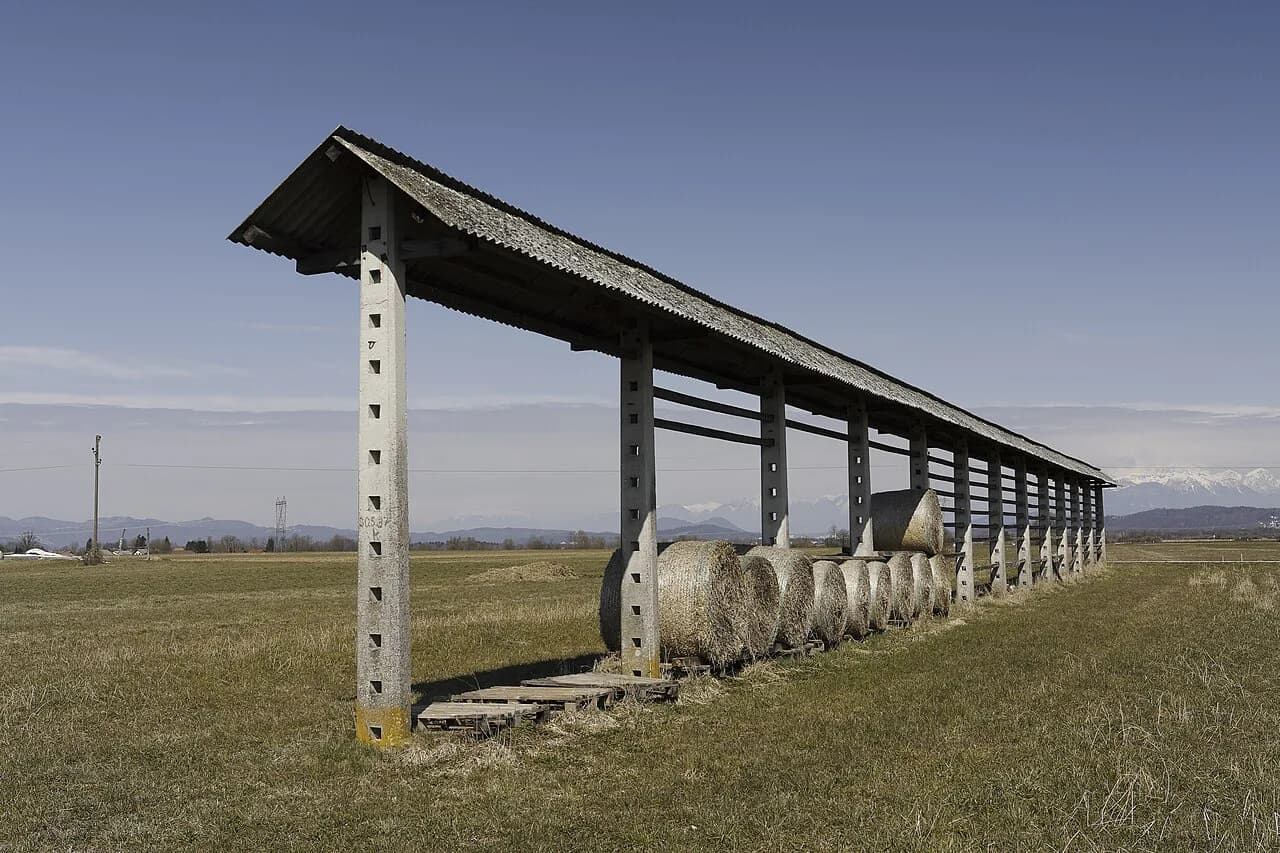
A kozolec is a freestanding wooden drying rack for hay and crops, built chiefly in Slovenia and a few neighboring regions. You will spot them along rural roads as open-sided timber frames, often with a roof, standing alone in a meadow or beside a farm building. This guide explains the main types, what farmers dried on them, how the construction kept them standing for generations, and where to see a cluster of preserved examples.
The short version for a traveler: a single straight rack is a stog, while a larger double rack with a roof and often a storage area is a toplar. Once you can name those two, the structures stop blurring into the landscape and start reading as a record of how the countryside worked.
What a kozolec is: a freestanding wooden drying rack
A kozolec is a permanent outdoor structure made mainly of wood, with horizontal slats or lattices that let air move through the crop stacked on it. Unlike a barn, it has no solid walls, so wind does the drying rather than shelter. Farmers placed them close to the farmstead or out on a field or meadow, wherever the airflow and the work routine made sense.
The open-sided design is the whole point. A rack holds cut hay, corn, beans, flax, hemp, and legumes off the ground while air passes through, keeping the crop dry and safe from rot, pests, and weather.
Single racks and double toplars: how the main types differ
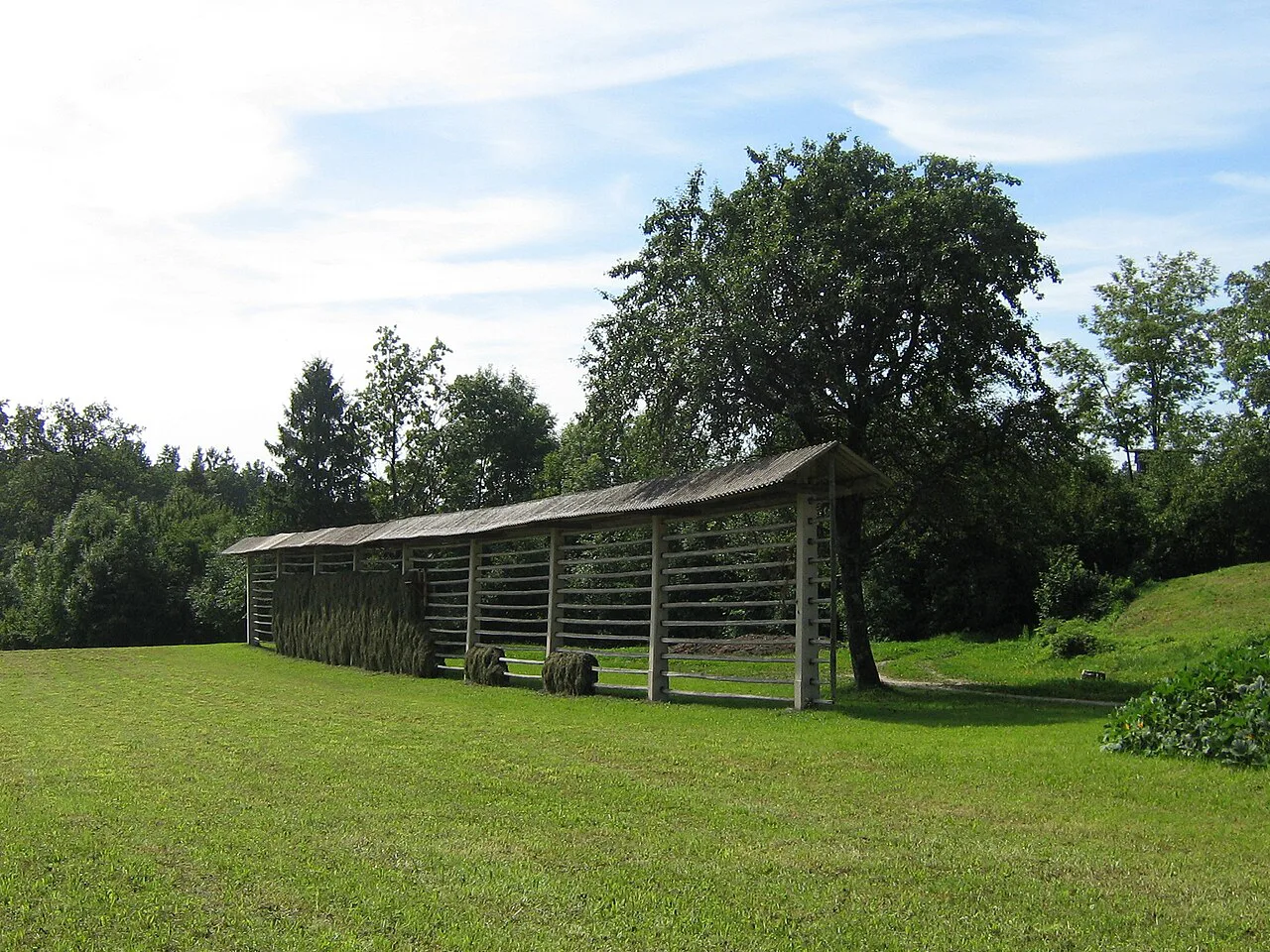
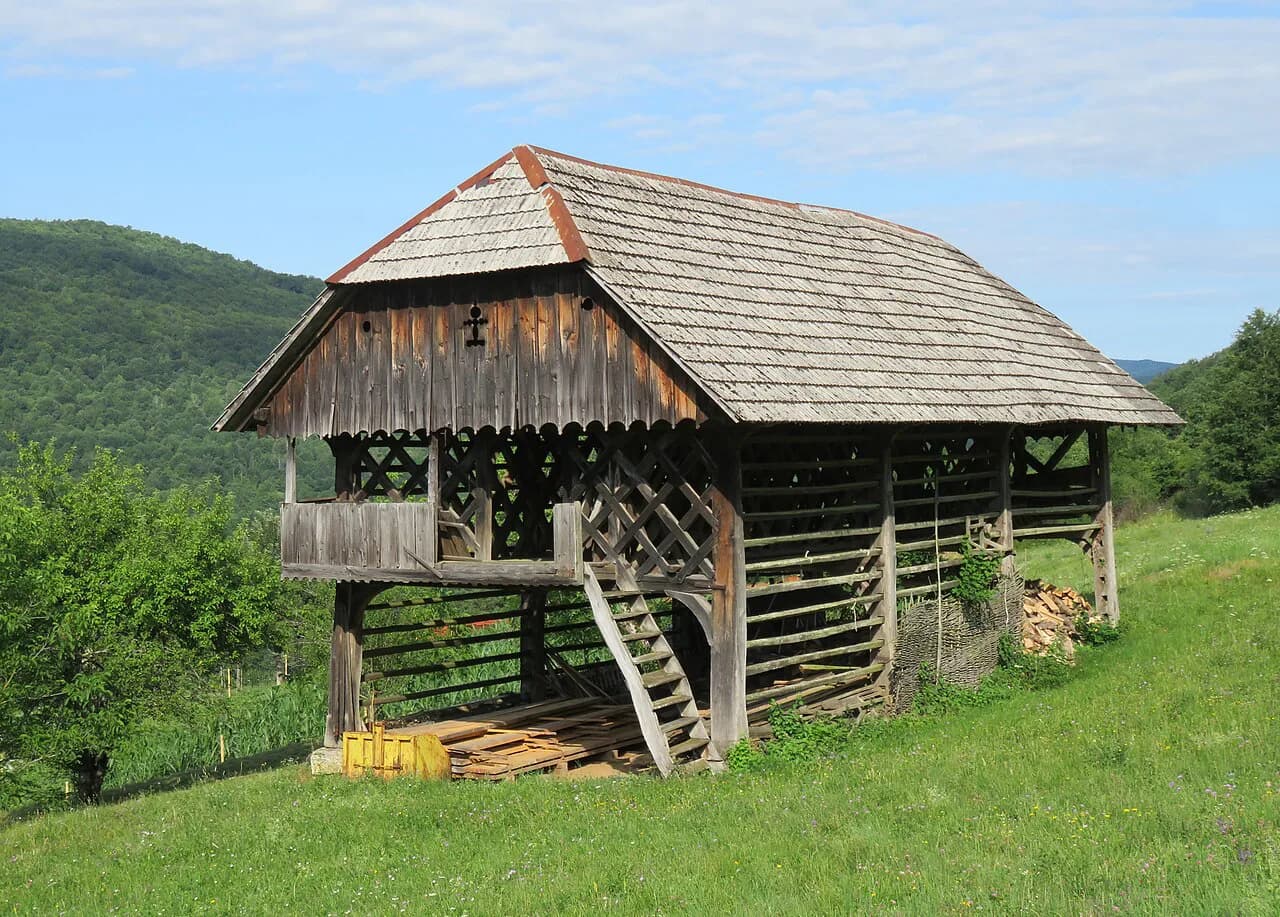
The single form, the stog, is a straight rack: one line of uprights carrying horizontal drying arms. The double form, the toplar, pairs two racks under a roof, which creates sheltered space between them and is often used for storage as well as drying.
That extra covered volume explains why toplars doubled as tool sheds, cart shelters, and storehouses for building materials. When you see a roofed double rack with goods underneath, you are looking at a structure doing two jobs at once.
You will also meet regional variants. In the Dolenjska countryside around Škocjan, the ethnographic record shows toplars with attached wells, roofed single racks, racks with an upper loft, and one built as a garage beside the main road toward Turjak.
What was dried on a kozolec and why airflow mattered
Before mechanized farming and climate-controlled storage, getting hay dry was the difference between feeding livestock through winter and losing the crop. A kozolec kept the cut grass off damp ground and exposed to moving air until it was safe to store.
The crop list went well beyond hay: grains, corn, flax, hemp, legumes, cuttings of tuberous plants, and even ferns were laid on the racks to dry. Farmers built them around farmsteads and on the estates of castles and monasteries, so the silhouette turns up in settings grander than a single smallholding.
Materials and construction: larch, oak, and replaceable side pillars
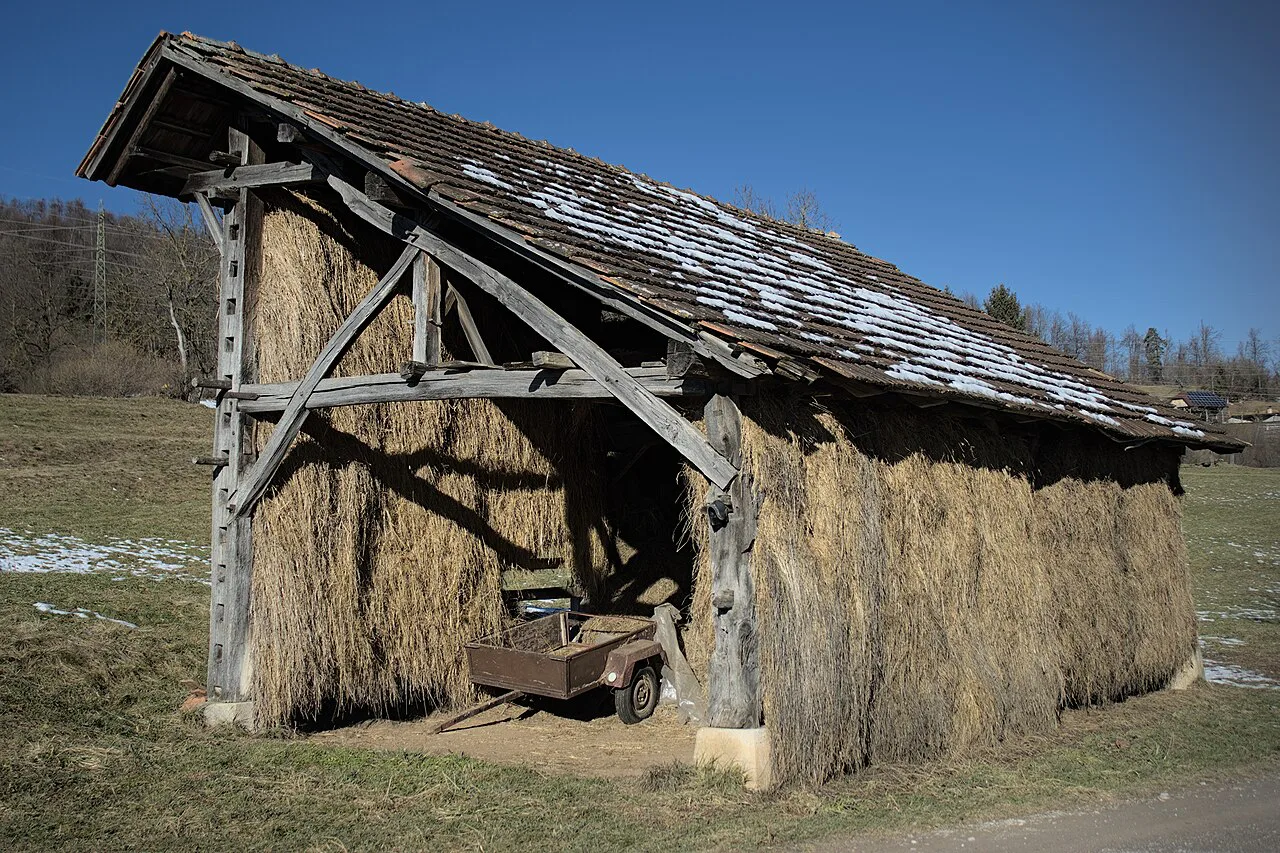
Kozolci are usually built from larch or oak, with wooden slats or lattices fitted so air circulates through the drying crop. The carpentry is careful and visible: joints, arms, and roof framing are meant to be looked at as well as used.
The repair trick is the side pillars. On Lah's kozolec at Migolica near Mirna, the main pillar is not a single piece of oak; it is supported by additional side pillars driven into the ground, so when one rots it can be swapped for a new one. That approach, plus regular replacement of perishable parts, is why these timber frames outlast the people who built them.
Roofing changed with the materials available. Lah's kozolec carried a thatched roof before straw gave way to fiber-cement sheeting in the 1970s, and later to roofing made by the Trimo company of Trebnje. Reading those layers tells you roughly when a rack was last maintained.
Where kozolci are found in the Slovenian landscape
Kozolci stand close to farmsteads, out on fields and meadows, and around the estates of castles and monasteries. Farmers placed a rack alone in an open meadow for wind, while one beside a barn served the farmyard.
If you are driving between towns and want a framework for what you pass, the broader story of rural building belongs with the rest of Slovenian architecture, from farm outbuildings to church compounds. It helps to know that a roofed double rack is not a barn and a bare straight rack is not a fence.
Some racks have been restored and repurposed as storage sheds, event spaces, or wedding and gathering venues, and others are preserved in open-air museums. That means a kozolec you see today may be a working agricultural tool, a converted venue, or a museum piece.
Seeing a kozolec up close: the Land of Hayracks near Šentrupert
The concentrated place to study these structures is the Land of Hayracks (Dežela kozolcev), an open-air museum near Šentrupert in the Dolenjska region. It holds 19 different drying structures, mostly from the Mirna Valley, and its purpose is to show how hayracks developed from simple drying frames into complex double toplars.
The site covers 2.5 hectares with about 1 kilometer of paths, and it gathers all six typical Slovenian hayrack types: three single and three double. The oldest structure there, Luka's toplar, carries a date of 1795, so treat it as a piece of history rather than a description of current farm practice.
Go with the expectation of an outdoor walk between timber frames, not a gallery visit: the value is in comparing forms side by side and seeing how the roof, arms, and storage bays change from one type to the next. The museum's own site is the place to confirm visiting arrangements before you set out.
Other places to see a preserved kozolec: Rogatec and Henley
The open-air museum at Rogatec (Muzej na prostem Rogatec) presents the folk architecture and cultural traditions of the Obsotelje region, with buildings dated to the period between the 18th and 20th centuries. It is a different setting from Šentrupert: here the hayrack sits among other relocated rural buildings rather than in a dedicated hayrack collection.
Outside Slovenia, a reduced copy of Lah's kozolec stands in Gillots Field at Henley in England, built by specialized Slovenian craftsmen living in Trebnje. It measures 8.4 meters long and 3.5 meters high in two sections, and because England's climate is damper it rests on concrete foundations with the side pillars stopping at the slab.
How to read a kozolec as a traveler
Start with the roofline. No roof and a single straight line of arms means a stog; a roof spanning two racks means a toplar. Then look underneath: stored tools, carts, or machinery confirm the double rack was doing storage duty, not just drying.
Next, check the uprights for side pillars and fresh timber. Visible replacement at the base is evidence of the maintenance routine that keeps old racks in service, and patched roofing hints at the era of the last major repair.
Finally, note position. A rack standing alone in an exposed meadow was placed for wind; one built against a barn or manor wall was sited for convenience. That single observation separates a working agricultural structure from a decorative survivor, the same way other Slovenian traditions survive by being used rather than only displayed.
Which hayrack site fits your route
Choose Šentrupert and the Land of Hayracks if you want the widest comparison in one stop, with all six typical types laid out along a short path. Choose Rogatec if you would rather see a hayrack within a wider open-air museum of regional folk buildings.
Either way, the rewards come from looking closely at joints, arms, and side pillars rather than ticking off a monument. For more on the rural customs and craft that surround these structures, browse the Slovenia culture section before you go.
Explore more Slovenia guides
Frequently Asked Questions
What is the plural of kozolec?
The plural is kozolci. You will see it in museum signage and in place names associated with hayrack collections.
Are kozolci still used on farms today?
Yes, though fewer farms rely on them for drying hay. Some remain in agricultural use, mainly in more traditional regions, while others have been restored as storage sheds, event spaces, or museum exhibits.
How do you tell a stog from a toplar?
A stog is the single straight rack, one line of uprights carrying horizontal drying arms. A toplar is the double form: two racks under a roof, which creates sheltered space between them often used for storage as well as drying.
Sources
Notes for your Slovenia trip
Optional updates to our Slovenia place guides.
You might also like
Continue reading
More guides you'll find useful