Slovenian Traditions: What Visitors Actually See and When
Slovenian traditions you can actually encounter: Kurentovanje in Ptuj, Easter butare and pirhi, May bonfires, potica and Prešeren Day on February 8.
On this page
The Slovenian traditions a visitor can plan around are mostly tied to the church calendar and to a handful of named places: Kurentovanje in Ptuj, Palm Sunday butare bundles, kresovanje bonfires on the eve of May 1, gregorčki candle boats on March 12 and Prešeren Day on February 8. Everything else, from potica baking to the blessing of Easter food, belongs to households and parishes rather than to a ticketed event. This guide sorts the two apart and explains how to watch without getting in the way.
The country's traditions draw on Slavic roots, Catholicism and influences from Roman, Celtic and Austro-Hungarian neighbors, which is why a single spring can hold both church processions and a carnival of bell-ringing figures. Slovenian culture as a whole rewards a little preparation before you arrive, so you recognize what you are looking at rather than photographing it blind. The sections below follow the year roughly from February to spring, then move to the table, bees, music and the hayrack.
Kurentovanje in Ptuj: bells, sheepskin and the end of winter
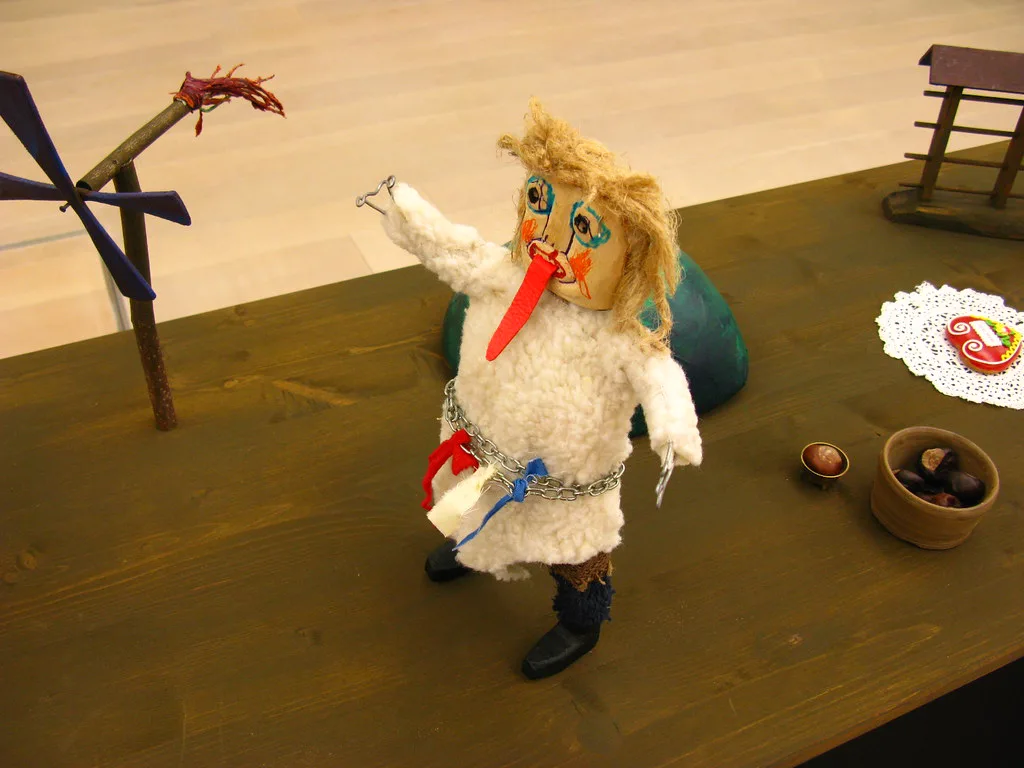
Kurentovanje is a carnival held in Ptuj and in other towns, built around the Kurent, a figure covered head to toe in sheepskin and hung with large bells that ring as the wearers stomp and swing wooden clubs. The noise is meant to drive winter out and bring spring in. What began as a way of keeping old customs alive now runs as a parade with music and other costumes joining the Kurent groups, and men, children and women all wear the outfit today.
For a visitor, that means the procession is a street event rather than a staged show, so your best plan is to stand at the edge of the route and let the groups pass. The carnival's dates move with the church calendar each year, so confirm the current schedule with the Ptuj tourist information center before you book travel around it.
Easter: butare on Palm Sunday, žegnanje and pirhi eggs
Easter in Slovenia mixes public church customs with things that happen at home, and the two should not be confused. On Palm Sunday, people carry bundles of branches and greenery called butare to church for blessing, and the custom is old enough that its origins are usually given in centuries rather than decades. You will see these bundles in procession outside churches, and they are often assembled at home rather than bought.
On Holy Saturday, food baskets are taken to churches or to village shrines for žegnanje, the blessing of Easter food, and the food is not eaten until Easter Sunday. The baskets are often covered with embroidered cloths, which is the detail to look for if you are watching from a distance. The most visible home custom is the decorating of hard-boiled eggs, known as pirhi, traditionally dyed with onion skins and patterned with attached leaves or spring flowers.
Good Friday is a day of fasting, with no Mass held, while fire and water are consecrated on Holy Saturday morning and the new fire is carried home to purify each room of the house. Easter Sunday falls on the first Sunday after the first full moon following the vernal equinox, which places it between March 22 and April 25 each year. Because the whole Easter cluster shifts with that rule, any trip planned around these customs needs to start from the confirmed date for your year rather than last year's calendar.
Kresovanje: bonfires on the eve of May 1
Labour Day on May 1 is welcomed with kresovanje, bonfires lit across the country on the evening before, when people gather for an occasion that draws all generations. This is one of the traditions you can most easily join, because it takes place outdoors in villages and towns rather than in a hall. Ask at a local tourist information center which bonfire near you is public and where to leave a car, since these are usually field or hillside sites rather than formal venues.
St. Gregory's Day on March 12 and the gregorčki candle boats
St. Gregory's Day on March 12 marks the arrival of spring, and children build small models called gregorčki, tiny houses, boats or other shapes fitted with a candle inside, which are set afloat on rivers such as the Gradaščica. It reads as a spectacle of light on water and a signal that the days are getting longer. The custom has been safeguarded as part of Slovenia's cultural heritage, so you may see it referenced in museum displays and school events as well as at the water's edge, and mid-March is one of the few fixed dates on this calendar.
Prešeren Day on February 8: where the cultural holiday is marked
February 8 is Prešeren Day, a national cultural holiday dedicated to the poet France Prešeren, and events take place across the country, with the largest in Kranj and Vrba. Kranj is known as Prešeren's Town and Vrba is his birthplace. In Vrba, people walk a 10-kilometer route along the Žirovnica Cultural Heritage Trail that starts at Prešeren's birth house and continues through fields and country paths to the birth houses of other figures from Žirovnica, as well as Anton Janša's apiary.
Kranj also holds the Prešernov smenj fair on the same day, which draws large crowds. For a visitor, the choice is between the walk in open country and the fair in town, and either one makes Gorenjska the natural base for the day. Expect cold February weather and treat the events as a reason to be in the region rather than a full day's program.
What goes on the table: potica and the holiday menu
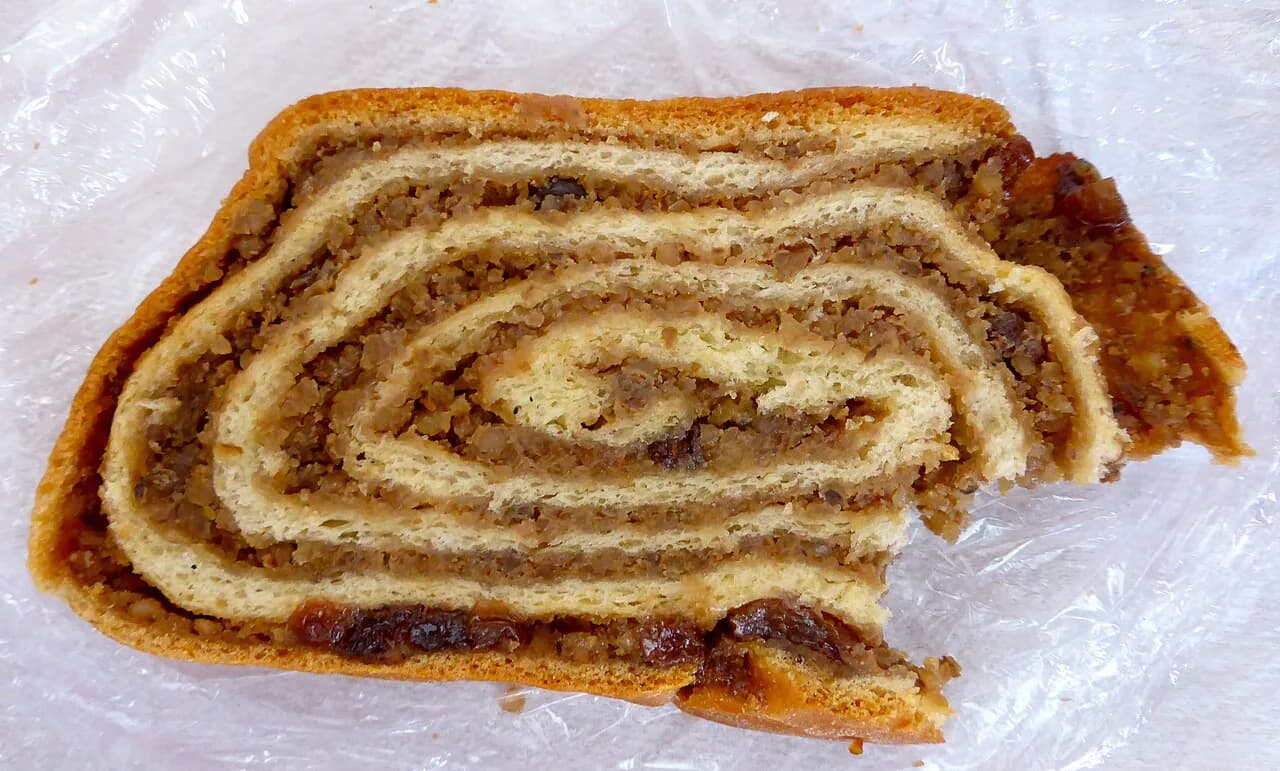
Potica is a rolled sweet bread baked at Christmas and Easter, and it turns up on holiday tables alongside baked ham, horseradish and eggs. The walnut filling is the version you will meet most often, with poppy seed, tarragon, coconut and a layered curd-cheese and walnut type called potratna also common, and gluten-free loaves are now widely sold. A bakery slice is the easy introduction; a whole loaf is a holiday purchase.
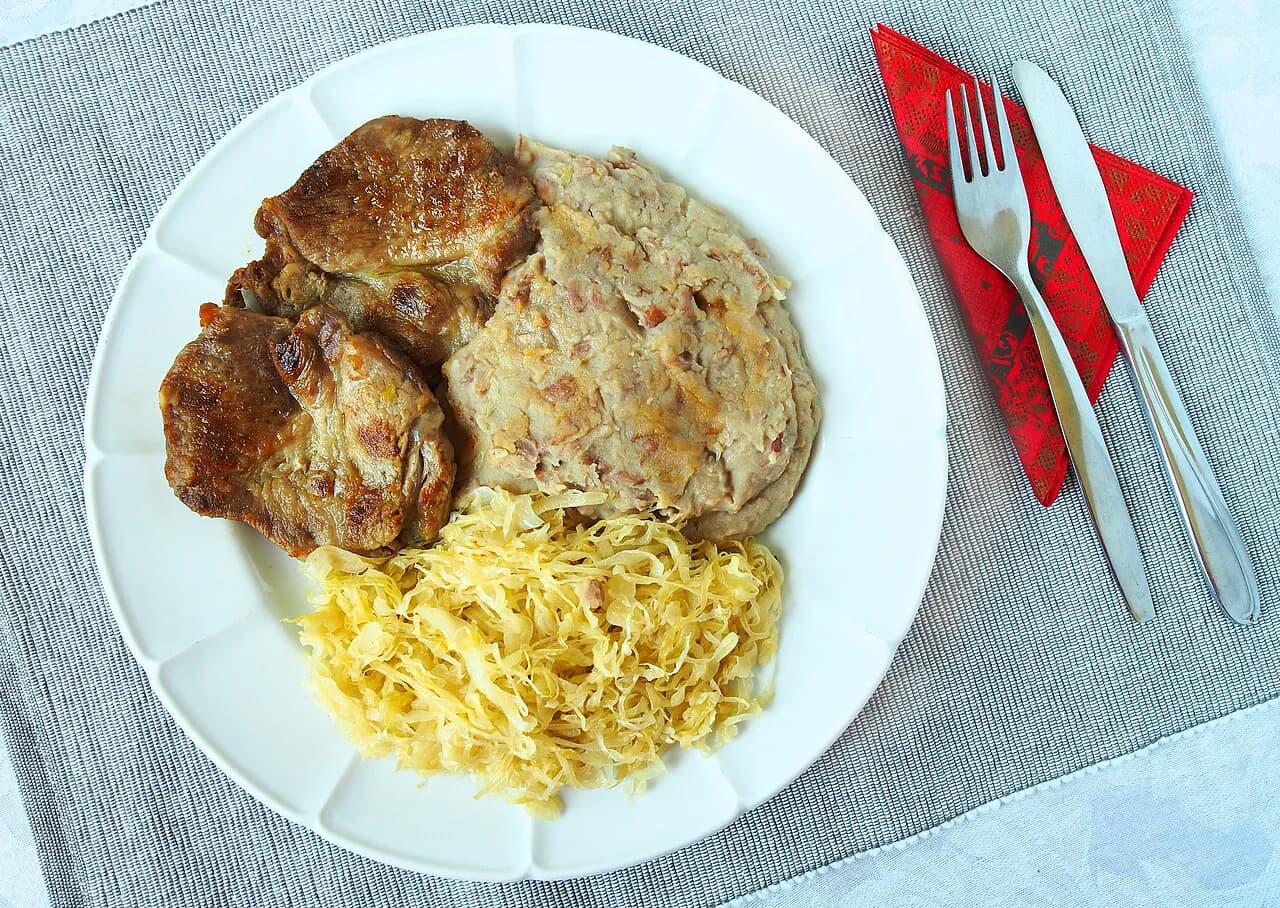
Slovenia's cooking is usually described through four regional worlds: Alpine, Mediterranean and Karst, Pannonian, and the central area around Ljubljana, each shaped by its landscape and neighbors. The Alpine kitchen leans on milk and honey, while the Mediterranean and Karst take flavor from the bora wind and the sea. Reading a menu with those regions in mind explains why the same country serves dairy-heavy dishes in the north and olive oil and cured pork near the coast.
Beekeeping as a living tradition, and the hayrack beside it
Beekeeping runs through Slovenian rural life and shows up in places a visitor can actually reach, including Anton Janša's apiary on the Žirovnica trail and the Museum of Apiculture in Radovljica. These are the practical stops if you want to see hives and equipment rather than just honey on a shelf. The Carniolan bee is the regional strain behind much of this, and knowing the name helps when you read labels or talk to a beekeeper at a market.
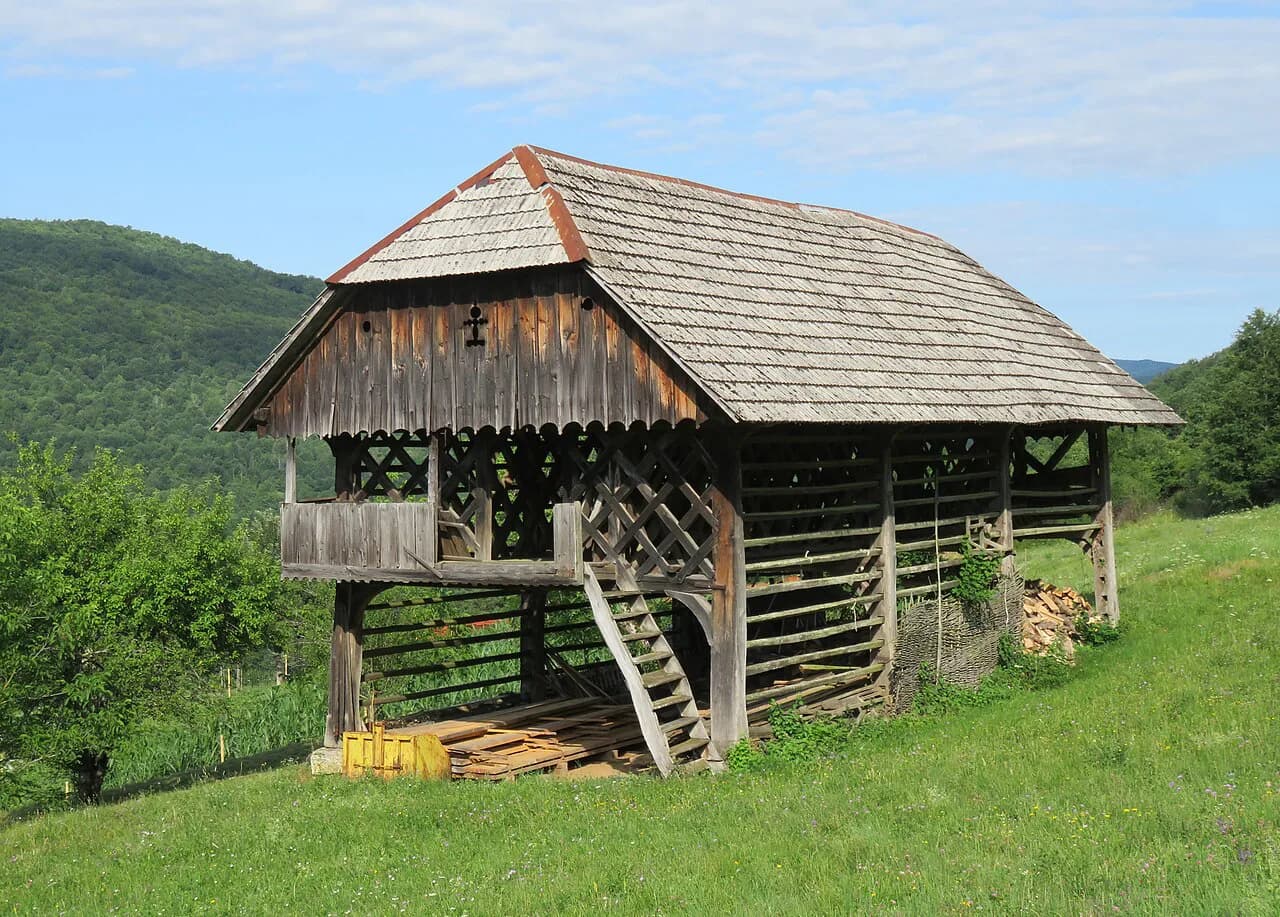
The countryside around these apiaries is also where you will meet the kozolec, the wooden hayrack that stands in fields and beside farm buildings across Gorenjska and the Karst. It is a working structure rather than a monument, so the ones you pass on the road are usually on private land.
Painted beehive panels, the decorated front boards known as panjske končnice, are the most photographed part of this heritage and often appear on souvenirs. If you plan to buy honey or a panel, check what the label says about origin rather than assuming a folk design means a local hive.
Folk music and traditional dress
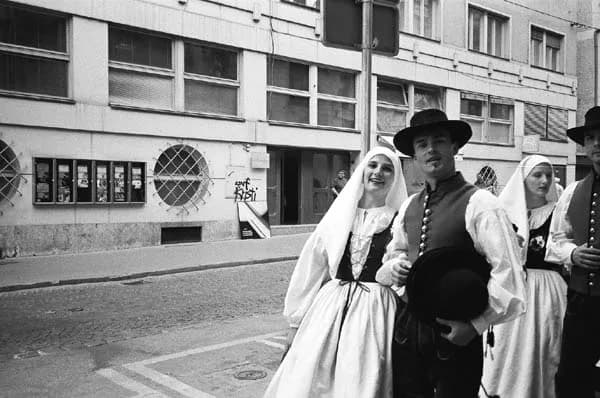
Folk music belongs to the same ceremonial world as the church customs, and it is most likely to reach you at a village event, a holiday gathering or an evening built for groups. The Avsenik Ensemble is the name most often attached to the popular folk-influenced sound, so it is a useful reference point if you are trying to identify what you are hearing. Traditional dress appears at these occasions rather than in daily life, and local noticeboards and tourist information centers are the places to ask what is on during your dates.
Fucanje and Easter games in Gorenjska villages
Easter Sunday brings games as well as churchgoing. In the municipality of Radovljica, fucanje, a coin-throwing contest in which players aim to land a coin closest to a target and the winner takes all, takes place outside the cultural center in Mošnje and behind the Pr' Tavčar restaurant in Begunje na Gorenjskem. Rolling eggs and egg hunts are the other games you may see children playing.
These are village events on private or municipal ground rather than visitor attractions, so the sensible approach is to ask locally whether outsiders are welcome before joining a circle of players. If you are staying in Radovljica over Easter, the tourist information center there is the place to confirm what is running that weekend.
How to watch respectfully
Several of these customs are religious services first and photo opportunities second. The blessing of food on Holy Saturday and the Palm Sunday procession happen in or outside churches, so dress plainly, stay at the back during Mass, and do not photograph people's faces or their food baskets up close without asking. Kurentovanje and kresovanje are public street events and easier to photograph, but the Kurent costume is heavy and the wearer's vision is limited, so keep clear of the swinging clubs. The practical trade-off is that the most atmospheric traditions, the home baking, the family table and the village games, are the least accessible; plan around what is public and accept that the rest is something you will glimpse rather than attend.
Which tradition should you plan a trip around?
Build a trip around Kurentovanje in Ptuj or the Easter customs if you can travel in late winter or spring, since those are the events with public processions and street crowds. Prešeren Day on February 8 is the fixed date, which makes it the easiest to plan, but it comes with February weather and a program that varies by town. Check the current dates and event details with the local tourist information center for the town you choose, because the church calendar moves and organizers publish their own schedules.
If your dates fall outside those windows, shift the plan toward what is visible year-round: potica in bakeries, beekeeping collections in Radovljica, and the vocabulary you will meet on signs and menus. Slovenia is small enough that a single base can put you within reach of several of these places, but not all in one day: Ptuj in the east, Radovljica and the Gorenjska villages in the north, and the Žirovnica trail all sit in different corners. Choose one region, match it to the season, and let the calendar decide the rest.
Explore more Slovenia guides
Frequently Asked Questions
Do I need tickets to see Kurentovanje or the May 1 bonfires?
Both play out on streets and in the open rather than as seated performances. Dates shift each year with the church calendar and local organizers set their own programs, so ask the tourist information center in the town you plan to visit for the current schedule and for advice on parking and crowds.
What does potica taste like, and when do Slovenians eat it?
Potica is a rolled sweet bread with a filling, most often walnut, and it is baked for the Christmas and Easter holidays rather than as an everyday loaf. Other common fillings include poppy seed, tarragon and coconut, plus a layered curd-cheese and walnut version called potratna, and gluten-free loaves are widely sold.
Can I join the Easter food blessing or the fucanje games?
The blessing of food is a church custom, so the appropriate way to take part is to attend as a worshipper rather than as a spectator with a camera. Fucanje and the other Easter games in Mošnje and Begunje na Gorenjskem are village events, so ask locally beforehand whether visitors are welcome to join or should simply watch.
Sources
Notes for your Slovenia trip
Optional updates to our Slovenia place guides.
You might also like
Continue reading
More guides you'll find useful